
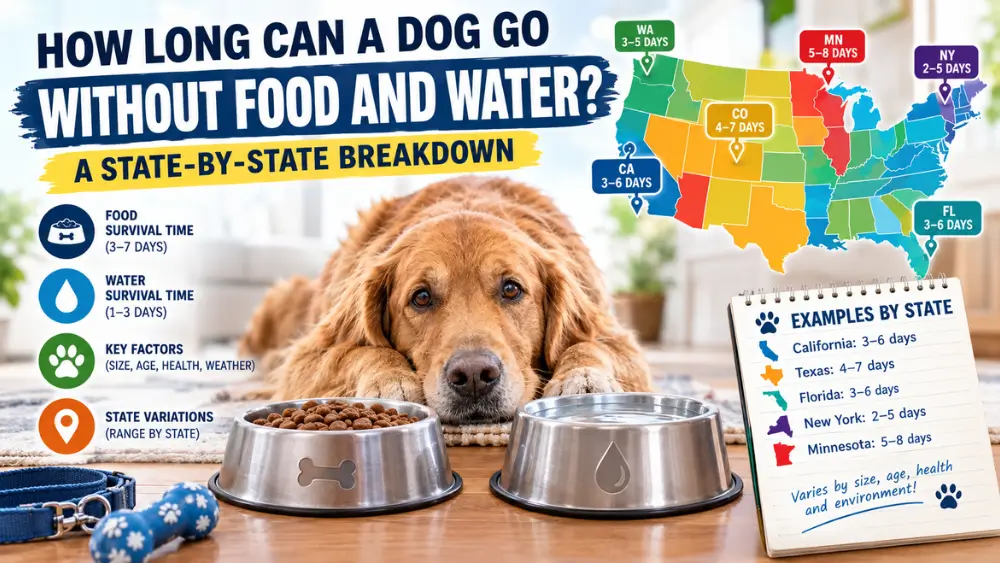
Introduction:
As a dog owner in Canada, whether you are navigating a blizzard in Ontario or a heatwave in British Columbia, the question of how long your dog can go without food and water is a terrifying one. It usually arises during a crisis: a dog has escaped, a pet is refusing food due to illness, or you are preparing for a potential emergency evacuation.
The truth is, the physiology of a dog is remarkably resilient regarding food but incredibly fragile regarding water. While a dog can survive for weeks without food in extreme cases (though this is never recommended and constitutes neglect), water is the absolute priority.
This article provides a deep dive into the physiological limits of canine survival, referencing standards set by the Canadian Veterinary Medical Association (CVMA) and provincial SPCA guidelines. We will move beyond generic advice to explore how breed, age, and the Canadian climate impact these timelines.
The Science of Survival: Food vs. Water
To understand the timeline, we must distinguish between the body’s need for energy (food) and its need for homeostasis (water).
Water Deprivation: The 72-Hour Rule
Water is essential for every metabolic process in a dog's body. It regulates temperature, transports nutrients, and flushes toxins. According to veterinary consensus, a dog deprived of water will begin to suffer organ failure within 72 hours.
-
24 Hours: The dog enters mild dehydration. The body begins to pull water from cells to maintain blood volume.
-
48 Hours: Severe dehydration sets in. The kidneys are under immense strain, and the blood becomes viscous (thicker).
-
72+ Hours: The kidneys may shut down, leading to uremia (toxin buildup in the blood) and death.
Canadian Context: In winter, dehydration is often overlooked. Dogs eating snow to survive is a myth; it takes energy to melt snow, and it lowers the body temperature, accelerating hypothermia. In summer, a dog left in a car or without shade can hit the 72-hour limit in a matter of hours.
Food Deprivation: The 5–7 Day Rule
Food provides glucose and fats. When a dog stops eating, the body first uses glycogen stores in the liver (lasting about 24 hours). After that, it begins to break down fat for energy (ketosis). If the dog is hydrated, this process can sustain them for 5 to 7 days before the body starts catabolizing muscle tissue (including the heart muscle), leading to organ failure.
The Variables: Why Timelines Shift
The "3-day" and "7-day" rules are baselines. In the real world, several factors act as multipliers or divisors on these timelines.
1. Size and Breed (The Surface Area Law)
Small dogs dehydrate faster than large dogs.
-
Toy Breeds (e.g., Chihuahua, Pomeranian): These dogs have a high surface-area-to-volume ratio. They lose water through respiration and evaporation much faster. A toy breed may only last 24–48 hours without water.
-
Giant Breeds (e.g., Great Pyrenees, Newfoundland): These dogs have larger reserves. A healthy Newfoundland in a cool environment might stretch the water limit to the full 72 hours, though distress begins much earlier.
2. Age: Puppies vs. Seniors
-
Puppies: A puppy’s metabolic rate is incredibly high. They need constant hydration and nutrition to grow. A puppy can go without water for only a few hours before becoming critical. Hypoglycemia (low blood sugar) in puppies without food can lead to seizures within 12–24 hours.
-
Senior Dogs: Senior dogs often have compromised kidney or liver function. They cannot concentrate urine as efficiently, meaning they lose water faster. They are also more prone to underlying conditions that make fasting dangerous.
3. Health Status and Medications
-
Kidney Disease: Dogs with renal issues cannot regulate fluids and will crash quickly.
-
Diabetes: A diabetic dog without food risks hypoglycemia; a diabetic dog without water risks ketoacidosis (a life-threatening chemical imbalance).
-
Medications: Diuretics (often used for heart conditions) flush water from the body, accelerating dehydration.
4. Activity Level and Environment
A dog running in a park in July will dehydrate faster than a dog sleeping on a couch in an air-conditioned room. Panting is the primary way dogs cool down, and it is a major source of water loss.
Canadian Specifics: Regional and Climatic Factors
Canada presents unique challenges for dog survival that differ from the standard advice found on American pet blogs.
Winter Risks (Hypothermia and Snow)
In provinces like Alberta, Saskatchewan, and Manitoba, winter temperatures can drop to -40°C with wind chill.
-
Caloric Needs: Dogs burn more calories (food) to stay warm. A dog lost in the winter without food will run out of energy reserves much faster than in summer.
-
Water Sources: Lakes and puddles are frozen. A dog cannot access liquid water.
-
The SPCA Guideline: Most provincial SPCAs (e.g., BC SPCA, Ontario SPCA) mandate that outdoor dogs must have access to unfrozen water. Owners must use heated bowls. A dog left outdoors without a heated water source in a Canadian winter is at risk of dehydration and rapid hypothermia.
Summer Risks (Heatstroke)
In Southern Ontario or interior BC, humidity combined with heat creates a "feels like" temperature that can be lethal. A dog cannot sweat; they rely on panting and paw pads. Without water, heatstroke sets in rapidly, causing brain damage even if the dog survives the dehydration.
Regional Veterinary Networks
If you lose a dog in a remote area (e.g., Northern Quebec or the Territories), emergency vet access is limited. This makes prevention and understanding the timeline critical. You may need to rely on Search and Rescue (SAR) protocols rather than immediate veterinary intervention.
Recognizing the Red Lines: Signs of Dehydration and Starvation
You should not wait for the 72-hour mark to act. Intervention is required at the first sign of distress.
Signs of Dehydration (Stages)
-
Early Stage:
-
Skin "tenting": Gently pinch the skin on the back of the neck. If it doesn't snap back immediately, the dog is dehydrated.
-
Dry gums: Gums should be wet and slippery. If they are tacky or dry, hydration is low.
-
-
Moderate Stage:
-
Sunken eyes.
-
Lethargy and weakness.
-
Loss of skin elasticity that takes seconds to return.
-
-
Severe Stage (Emergency):
-
Collapse.
-
White or grey gums.
-
Seizures.
-
Coma.
-
Signs of Starvation (Metabolic Crisis)
-
Ketosis: A sweet, acetone-like smell on the breath.
-
Muscle Wasting: Visible loss of mass over the spine and hips.
-
Lethargy: The dog becomes unwilling to move.
-
Vomiting: Often bile (yellow foam), which indicates an empty stomach.
The "Sick Dog" Scenario: When It's Not an Accident
Often, the question "how long can a dog go without food" arises because the dog is refusing to eat, not because they are lost.
When Fasting is Safe (The "Tummy Bug")
Just like humans, dogs can get gastrointestinal bugs. A vet may recommend a 12–24 hour fast (with water available) to let the stomach settle. This is a controlled, monitored fast.
When Fasting is Dangerous
If a dog refuses food for more than 48 hours, it is a medical emergency. This is especially true if accompanied by:
-
Vomiting
-
Diarrhea
-
Lethargy
-
Blood in stool
Canadian Veterinary Standards: The CVMA and local vets strongly advise against "waiting it out" if a dog hasn't eaten for two days. Conditions like Pancreatitis, Intestinal Blockage (foreign body), or Parvovirus require immediate care.
Emergency Intervention: What to Do
If you find a dog that has been deprived of food or water, do not offer a massive meal or a bowl of water immediately.
1. Water: Small Sips
Giving a dehydrated dog too much water too fast can cause water intoxication (hyponatremia), which causes brain swelling.
-
Action: Offer small amounts of water every 10–15 minutes. If the dog vomits, stop and go to a vet.
-
Electrolytes: In severe cases, unflavored pediatric electrolyte solutions (consult vet first) can help, but plain water is usually best.
2. Food: Bland and Small
Refeeding Syndrome is a real danger. When a starving body gets food, insulin spikes, causing electrolytes (phosphate, potassium, magnesium) to crash, which can be fatal.
-
Action: Offer a small amount of boiled chicken and rice, or a high-quality recovery diet.
-
Frequency: Feed 4–6 small meals a day rather than one large one for the first 48 hours of recovery.
Prevention: Best Practices for Canadian Owners
To ensure your dog never reaches these critical limits, adhere to these guidelines:
-
Hydration Stations: Place multiple water bowls around the house. In winter, check outdoor bowls hourly; use heated bowls if the dog is outside for more than 15 minutes.
-
Travel Kits: When traveling in Canada (especially through remote areas like the Canadian Shield), carry a collapsible bowl and at least 4 litres of water per dog.
-
Microchipping and ID: If a dog is lost, the clock ticks immediately. Ensure tags have current phone numbers. Register with Canadian services like the Canadian Animal Rescue and Transport (CART) network or local SPCA lost pet databases.
-
Monitor Intake: Know how much your dog normally drinks. A sudden increase (polydipsia) or decrease is the first sign of illness.
Specific Breed Vulnerabilities
-
Brachycephalic Breeds (Pugs, Bulldogs, Boxers): These dogs have compromised airways. They pant inefficiently and overheat quickly. They cannot go without water for even 24 hours in warm weather.
-
Northern Breeds (Huskies, Malamutes): They are evolved for cold, but their thick double coat makes them highly susceptible to heatstroke. They need constant hydration in summer.
-
Toy Breeds: As mentioned, their small size is a disadvantage. They have no reserves.
Summary and Recommendations
How long can a dog go without food and water?
-
Water: 24–72 hours (Critical limit).
-
Food: 5–7 days (If hydrated).
The Canadian Rule of Thumb:
If your dog has not eaten for 24 hours, consult a vet.
If your dog has not drunk water for 12 hours, consult a vet immediately.
This is not a timeline to test. If you are asking this question because you suspect neglect (your own or someone else's), contact your local SPCA or the Canadian Veterinary Medical Association. In Canada, failing to provide adequate food, water, and shelter is a violation of animal cruelty laws under the Criminal Code of Canada.
Final Takeaway: Dogs are resilient, but they are not camels. They cannot store water. As a responsible Canadian owner, your job is to ensure they never have to rely on these survival limits. If you are planning a trip, ensure your pet sitter is aware of these critical timelines and has your vet's emergency contact numbers posted on the fridge.
Frequently Asked Questions (AI Overview Optimization)
Can a dog survive on snow instead of water?
No. Eating snow requires body heat to melt, lowering body temperature and leading to hypothermia. It does not provide enough hydration to prevent organ failure.
Is it okay to fast a dog with diarrhea?
Only for 12–24 hours and only with fresh water available. Extended fasting for diarrhea can weaken the dog, especially in Canadian winters.
What is the first sign of dehydration in dogs?
Loss of skin elasticity (skin tenting) and dry gums are the earliest indicators. Check these daily during hot or cold weather.
Do dogs need more water in winter?
Yes. The air is drier, and heating systems indoors dry out the air further. Dogs also burn more calories, producing metabolic waste that needs flushing.
When should I go to an emergency vet?
If the dog has gone 24 hours without water, or 48 hours without food, or is showing signs of lethargy, vomiting, or collapse. Do not wait for the 72-hour mark.