
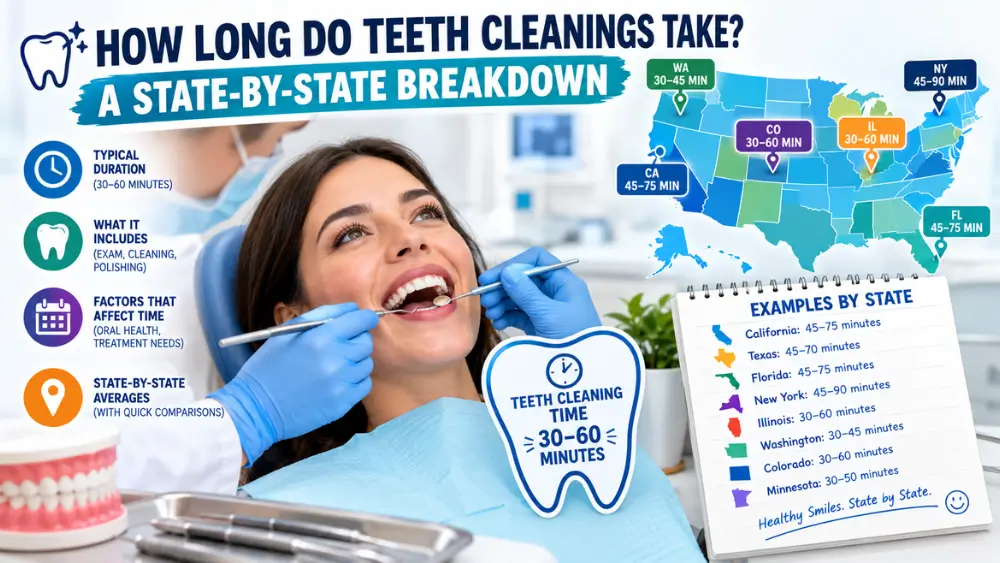
A routine dental cleaning typically takes 30 to 60 minutes for most adults. However, that timeframe can stretch to 90 minutes or more if you're due for a deep cleaning, have significant tartar buildup, or haven't seen a dentist in several years. The exact duration depends on your oral health status, the type of cleaning required, and the protocol of your dental office.
Understanding what influences the length of your appointment helps you plan your visit and know what to expect. This guide breaks down the variables that affect cleaning times, explains the different types of cleanings available in Canada, and answers the questions Canadian patients ask most often.
The Short Answer: Typical Teeth Cleaning Durations
Here's a quick reference for how long different types of dental cleanings generally take:
| Type of Cleaning | Typical Duration | Who Needs It |
|---|---|---|
| Routine prophylaxis | 30–60 minutes | Patients with healthy gums and minimal buildup |
| Cleaning with periodontal maintenance | 45–75 minutes | Patients with a history of gum disease |
| Full-mouth debridement | 60–90 minutes | Patients with heavy tartar or years since last visit |
| Scaling and root planing (per quadrant) | 45–60 minutes per visit | Patients with active periodontal disease |
| Child's cleaning | 20–30 minutes | Children with primary or mixed dentition |
These ranges reflect standard practices in Canadian dental offices. Some clinics schedule 45-minute blocks for routine visits, while others allow a full hour. The difference often comes down to how thorough the hygienist is and whether the dentist performs an exam during the same appointment.
Why Cleaning Times Vary So Much
The duration of a teeth cleaning isn't arbitrary. Several clinical and practical factors determine how long your hygienist needs to complete the work properly.
Your Oral Health Baseline
The single biggest factor is the condition of your teeth and gums when you arrive. Someone who brushes twice daily, flosses regularly, and visits the dentist every six months will have minimal plaque and tartar. A routine cleaning for this patient might take only 30 minutes.
By contrast, a patient who hasn't had a professional cleaning in three years may have heavy calculus deposits, inflamed gums, and bleeding points throughout the mouth. Removing that buildup safely and thoroughly takes considerably longer.
Amount of Plaque and Tartar
Plaque is the soft, sticky film of bacteria that forms constantly on teeth. It's easy to remove with brushing and flossing. When plaque isn't removed, it mineralizes into tartar (also called calculus), which is hard and firmly attached to the tooth surface. Tartar can only be removed with professional instruments.
The more tartar you have, the longer the cleaning takes. Light tartar along the gumline might add only a few minutes. Heavy deposits that extend below the gumline require more time, more instruments, and often more care to avoid damaging the teeth or gums.
Gum Health and Periodontal Status
Healthy gums are pink, firm, and don't bleed during cleaning. When gums are inflamed, they bleed easily, and the hygienist must work more carefully to avoid causing discomfort. Periodontal pockets—spaces between the teeth and gums that deepen when gum disease is present—require additional time to clean properly.
If your hygienist finds pockets deeper than 4 millimetres during probing, they may recommend a deep cleaning rather than a routine prophylaxis. That changes the appointment entirely.
Whether X-Rays Are Needed
Many Canadian dental offices take bitewing X-rays once a year or every 18 to 24 months, depending on your risk level. X-rays add 5 to 10 minutes to the appointment but are usually done before the cleaning begins. The Canadian Dental Association recommends radiographs based on individual risk factors rather than a fixed schedule, so your dentist will determine what's appropriate.
The Dentist's Exam
In most Canadian offices, the dentist performs a brief examination after the hygienist finishes cleaning. This exam typically takes 5 to 10 minutes and includes checking for cavities, reviewing X-rays, and examining soft tissues for signs of oral cancer or other concerns. Some offices schedule the exam as a separate visit, while others combine it with the cleaning.
Your Comfort and Sensitivity
Patients with sensitive teeth or gums may need more frequent breaks during cleaning. The hygienist might apply topical numbing gel or use a gentler technique. These accommodations add time but make the experience more tolerable.
What Happens During a Professional Teeth Cleaning?
Understanding the steps involved helps explain why cleanings take as long as they do. Here's what typically happens during a routine prophylaxis in a Canadian dental office.
1. Medical History Review
The hygienist or dentist reviews your medical history, including any changes since your last visit. They'll ask about new medications, surgeries, or health conditions that could affect your dental care. Certain medications thin the blood, which can increase bleeding during cleaning. Others cause dry mouth, which increases cavity risk. This step takes 2 to 5 minutes.
2. Oral Examination
Before cleaning, the hygienist examines your mouth for obvious problems—swelling, redness, sores, or signs of infection. They may also measure periodontal pockets using a probe. This step takes 5 to 10 minutes, longer if gum disease is suspected.
3. Plaque and Tartar Removal
This is the core of the cleaning and typically the longest step. Using hand scalers and ultrasonic instruments, the hygienist removes plaque and tartar from above and below the gumline. The time required depends entirely on how much buildup is present. Light buildup might take 10 minutes; heavy deposits could take 30 minutes or more.
4. Polishing
After scaling, the hygienist uses a rotating rubber cup and a gritty polishing paste to smooth the tooth surfaces. This removes surface stains and any remaining plaque film. Polishing usually takes 5 to 10 minutes.
5. Flossing
The hygienist flosses between each tooth to remove any loosened debris and check for areas of concern. This step is quick, usually 2 to 3 minutes.
6. Fluoride Treatment (Optional)
Some offices apply a fluoride varnish or gel after cleaning. This strengthens enamel and helps prevent cavities. Fluoride application takes 1 to 2 minutes, plus time to set. Not all adults receive fluoride at every visit; your dentist will recommend it based on your cavity risk.
7. Dentist Examination
As mentioned, the dentist examines your teeth, gums, and mouth after the cleaning. They may discuss findings, recommend treatment, or answer questions. This step takes 5 to 10 minutes.
Add these steps together, and a routine cleaning easily reaches 30 to 60 minutes.
Routine Cleaning vs. Deep Cleaning: What's the Difference?
Many Canadian patients hear the term "deep cleaning" and wonder how it differs from a regular visit. The distinction matters because deep cleanings take significantly longer and are typically billed differently.
Routine Cleaning (Prophylaxis)
A routine cleaning, also called prophylaxis, is preventive care for patients with healthy gums and minimal tartar. It focuses on removing plaque and tartar from above and slightly below the gumline. The goal is to maintain oral health, not treat disease.
Deep Cleaning (Scaling and Root Planing)
A deep cleaning—clinically called scaling and root planing—is a therapeutic procedure for patients with periodontal disease. It involves removing tartar and bacterial deposits from deep periodontal pockets, sometimes 5 millimetres or more below the gumline. The roots of the teeth are also smoothed (planed) to remove bacteria and encourage gum tissue to reattach.
Because deep cleaning is more involved, it's usually performed one or two quadrants at a time, with each visit lasting 45 to 60 minutes. Some dentists complete the entire mouth in two visits; others spread it over four. Local anesthesia is often used to keep patients comfortable.
After a deep cleaning, patients typically return for periodontal maintenance cleanings every three to four months. These visits are longer than routine cleanings—usually 45 to 75 minutes—because the hygienist must clean deeper pockets and monitor gum health closely.
How Long Do Teeth Cleanings Take for Children?
Children's cleanings are generally faster than adult cleanings, assuming the child is cooperative and has healthy teeth. A typical cleaning for a child takes 20 to 30 minutes.
The appointment includes a brief exam, scaling if needed, polishing, and often fluoride application. Children with braces may need extra time to clean around brackets and wires. Some pediatric offices schedule 30-minute blocks; others allow 45 minutes to accommodate wiggly patients or those who need extra encouragement.
The Canadian Dental Association recommends that children see a dentist within six months of their first tooth appearing or by their first birthday. Early visits establish good habits and make future cleanings easier.
Factors That Can Extend Your Cleaning Appointment
Even a routine cleaning can run longer than expected. Here are the most common reasons.
Heavy Tartar Buildup
If you've skipped regular cleanings or have difficulty brushing certain areas, tartar can accumulate quickly. Removing it takes time, especially if it's hardened and firmly attached.
Crowded or Crooked Teeth
Teeth that overlap or sit close together are harder to clean. The hygienist must navigate around tight contacts, which slows the process. Patients with braces or orthodontic appliances also require extra time.
Gum Recession
When gums recede, the roots of teeth become exposed. Root surfaces are softer than enamel and more sensitive. The hygienist must clean carefully to avoid discomfort, which can add time.
Dental Restorations
Crowns, bridges, implants, and fillings can trap plaque and tartar in ways natural teeth don't. Cleaning around these restorations requires extra attention and specialized instruments.
Sensitivity or Anxiety
Patients who experience pain or anxiety during cleaning may need breaks, numbing, or a gentler approach. These accommodations add time but improve the experience.
Office Protocols
Some Canadian dental offices build extra time into every appointment to ensure thorough care and patient comfort. Others operate on tighter schedules. If you're unsure how long your appointment will be, ask when you book.
How Often Should You Get Your Teeth Cleaned?
The Canadian Dental Association and most provincial dental associations recommend a professional cleaning every six months for patients with healthy teeth and gums. However, that interval isn't universal.
Your dentist may recommend more frequent cleanings—every three or four months—if you have:
-
A history of gum disease
-
Diabetes or other conditions that affect oral health
-
A weakened immune system
-
Tobacco use
-
Orthodontic appliances
-
Dry mouth from medications
Conversely, some low-risk patients may do well with cleanings every nine to twelve months. The right interval depends on your individual risk factors, which your dentist will assess during your visit.
Cost Considerations for Teeth Cleanings in Canada
Dental cleanings aren't covered by provincial health insurance for most adults. Canada's universal healthcare system covers medically necessary services, but dental care is largely private. Some provinces provide limited coverage for children, seniors, or low-income residents, but most adults pay out of pocket or through private insurance.
Typical Costs
The cost of a teeth cleaning in Canada varies by province and by the type of cleaning. As a general guide:
-
Routine cleaning (adult): $150 to $300
-
Child's cleaning: $100 to $200
-
Periodontal maintenance: $200 to $400
-
Scaling and root planing (per quadrant): $250 to $500
These figures are estimates. The actual cost depends on the time required, the number of units of scaling, and the fee guide your dentist follows. Each provincial dental association publishes a fee guide, though dentists aren't required to follow it exactly.
Provincial Variations
Fee guides differ across Canada. For example, Ontario, Alberta, and British Columbia have higher average fees than some Atlantic provinces. Quebec has its own system, and the Régie de l'assurance maladie du Québec (RAMQ) covers certain dental services for children under 10.
If you have private dental insurance, your plan likely covers a portion of cleaning costs—often 80 to 100 percent for preventive services. Check your plan's details to understand your coverage.
What If You Can't Afford a Cleaning?
Several options exist for Canadians who struggle with dental costs:
-
Dental schools: Universities with dental programs offer reduced-cost cleanings performed by supervised students.
-
Community health centres: Many cities have clinics that provide low-cost or sliding-scale dental care.
-
Provincial programs: Some provinces offer dental coverage for seniors, children, or low-income adults. Eligibility varies.
-
Payment plans: Many dental offices offer installment plans or accept credit cards with flexible terms.
The Canadian Dental Care Plan (CDCP), introduced in 2023, aims to expand dental coverage for uninsured Canadians. As of 2024, it's being rolled out to eligible seniors, children, and people with disabilities. Check the Government of Canada website for current eligibility and enrollment details.
Preparing for Your Cleaning: Tips to Make It Faster
While you can't control every factor, a few habits can help your cleaning go smoothly and quickly.
Brush and Floss Before Your Appointment
Arriving with a clean mouth won't eliminate the need for professional cleaning, but it reduces the amount of loose plaque the hygienist must remove. It also shows respect for your dental team.
Be Honest About Your Habits
Tell your hygienist if you've been skipping flossing, using tobacco, or experiencing sensitivity. This information helps them tailor the cleaning and avoid surprises.
Arrive on Time
Late arrivals can compress your appointment, forcing the hygienist to rush or reschedule. Arrive a few minutes early to complete any paperwork and settle in.
Ask Questions
If you're curious about what's happening or why a step takes so long, ask. Good hygienists welcome questions and will explain their process.
Common Questions About Teeth Cleaning Duration
Does a cleaning take longer if I have braces?
Yes. Braces and aligners create additional surfaces where plaque and tartar collect. Cleaning around brackets, wires, and bands takes more time—often 45 to 60 minutes instead of 30.
Can I get a cleaning and filling in the same appointment?
Sometimes. If you have a small cavity, the dentist may be able to fill it after your cleaning. However, many offices schedule fillings separately to allow enough time for both procedures.
How long does a first visit take?
A first visit to a new dental office often takes longer—up to 90 minutes—because it includes a comprehensive exam, X-rays, and a full medical history review in addition to the cleaning.
Is a 30-minute cleaning enough?
For patients with healthy gums and minimal tartar, 30 minutes is usually sufficient. If your hygienist routinely finishes in 20 minutes, you may want to ask whether a more thorough cleaning is needed. Conversely, if your cleaning always takes 60 minutes, that's fine too—it means your hygienist is being careful.
Do I need to do anything after a cleaning?
Avoid eating or drinking for 30 minutes if you received fluoride. Otherwise, you can return to normal activities immediately. Some patients experience mild sensitivity for a day or two, especially if they had heavy tartar removed.
The Bottom Line
A routine teeth cleaning in Canada generally takes 30 to 60 minutes. Deep cleanings and periodontal maintenance visits take longer—often 45 to 90 minutes—because they address disease and require more thorough work. The exact time depends on your oral health, the amount of tartar present, and the protocols of your dental office.
If you're due for a cleaning, don't delay based on time concerns. Most appointments fit easily into a lunch break or after-work slot. And if it's been years since your last visit, know that the first cleaning may take longer—but it's a crucial step toward better oral health.
For personalized advice, talk to your dentist or hygienist. They can give you a realistic estimate based on your specific needs and help you schedule an appointment that works for you.