
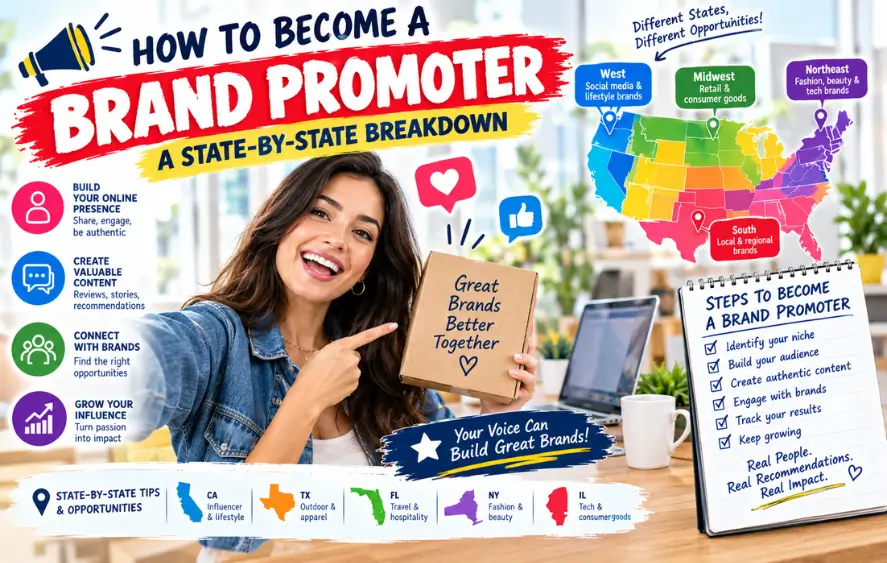
The Canadian job market is shifting. While the traditional 9-to-5 office role remains a staple, a growing number of Canadians are seeking flexible, dynamic ways to earn a living. Whether you are a student in Toronto looking to pay tuition, a new immigrant in Vancouver seeking to build a network, or a seasoned professional in Montreal looking for a side hustle, the role of a brand promoter offers a unique blend of flexibility, social interaction, and income potential.
If you have ever wondered how to turn your outgoing personality and social media savvy into a paycheck, you are in the right place. This guide will walk you through the exact steps to enter the brand promotion industry in Canada.
What is a Brand Promoter? (The Direct Answer)
At its core, a brand promoter is the human face of a company. You are the bridge between a product and the consumer. Your primary goal is to increase brand awareness, drive sales, and create positive associations with a specific company or product.
Unlike a generic salesperson, a brand promoter focuses on experience. You might be handing out samples of a new energy drink at a Toronto Blue Jays game, representing a luxury car brand at the Vancouver International Auto Show, or creating engaging TikTok content for a Canadian fashion retailer.
Key Distinction: In Canada, the terms "Brand Promoter," "Brand Ambassador," and "Brand Advocate" are often used interchangeably, though there are subtle differences. A promoter is usually paid to represent a brand at events. An ambassador often has a longer-term relationship and may be involved in content creation. An advocate is often a loyal customer who promotes a brand organically, sometimes for perks rather than a salary.
Why the Brand Promotion Industry is Booming in Canada
The Canadian marketing landscape has undergone a massive shift. According to recent data from the Interactive Advertising Bureau of Canada (IAB Canada), digital marketing spend continues to climb, but there is a renewed emphasis on "experiential marketing." Brands are realizing that digital ads are easily ignored, but a real human interaction creates a lasting memory.
Furthermore, the rise of the "creator economy" has blurred the lines between traditional promotion and content creation. Canadian brands like Lululemon, Shopify, and Tim Hortons are actively looking for authentic voices to represent them, moving away from polished actors to relatable, everyday Canadians.
Step-by-Step Guide: How to Become a Brand Promoter
Breaking into the industry requires a mix of preparation, networking, and persistence. Here is your roadmap.
Step 1: Assess Your Skills and Personality
Before you apply for your first gig, you need to understand what agencies are looking for. The most successful brand promoters in Canada share a specific skill set:
-
Communication: You must be fluent in English, and in many Canadian markets (like Montreal or Ottawa), bilingualism (French/English) is a massive asset that can increase your pay rate significantly.
-
Adaptability: The Canadian weather is unpredictable. You might be promoting a product in a blizzard one day and a heatwave the next. You need to be comfortable in diverse environments.
-
Energy: You are the entertainment. If you look bored, the consumer will be bored.
-
Digital Literacy: Modern brand promotion often requires you to post live updates on Instagram or TikTok while working.
Step 2: Build a "Promoter-Ready" Resume
Your standard corporate resume won't cut it here. You need a resume that highlights your people skills and reliability.
-
Headshot: Include a professional, high-quality photo. This is an industry where appearance and presentation matter.
-
Experience: If you lack formal marketing experience, highlight customer service roles (waiting tables, retail), volunteer work, or public speaking.
-
Social Media Links: Include handles for your public Instagram or TikTok. Agencies want to see if you have an existing following or a "look" that fits their brand.
Step 3: Find the Right Agencies and Platforms
You generally do not get hired directly by a large brand like Coca-Cola or Nike. Instead, you are hired by experiential marketing agencies or talent agencies.
Top Agencies Operating in Canada:
-
Mosaic North America: One of the largest, handling major grocery and beverage brands.
-
Match Marketing Group: Known for retail execution and brand advocacy.
-
The Mars Agency: Focuses on shopper marketing and retail.
-
Agency 71: A Canadian-owned agency specializing in field marketing.
Online Platforms:
-
LinkedIn: The best place to network. Follow "Brand Ambassador" recruiters and agencies.
-
Indeed and ZipRecruiter: Search for "Brand Ambassador," "Event Staff," or "Promotional Model" (though the latter is a specific subset).
-
Facebook Groups: There are numerous groups for Canadian brand ambassadors and event staff where last-minute gigs are posted.
Step 4: Nail the Audition (The "Casting Call")
In the brand promotion world, an interview is often a "casting call." You might be asked to role-play a scenario: "Sell me this pen" or "Approach me as if I am a customer at a Costco."
Tips for Success:
-
Smile: It sounds simple, but it is the number one requirement.
-
Be Vocal: Speak clearly and project your voice. Mumbling is a dealbreaker.
-
Know the Brand: Before the audition, research the client's product. If you are promoting a vegan snack, know the ingredients.
Step 5: Get Your Foot in the Door
You will likely start with "Generalist" or "Promotional Model" roles. These are the entry-level positions.
-
Alcohol Sampling: In provinces like Ontario and BC, alcohol sampling is a huge industry. You must be 19+ (or 18+ in Alberta/Manitoba/Quebec) to do this.
-
Trade Shows: The Canadian National Exhibition (CNE) in Toronto or the Calgary Stampede are massive hiring grounds for promoters.
-
Grocery Demos: Costco, Loblaws, and Sobeys frequently hire demonstrators.
The Financial Reality: How Much Do Brand Promoters Make in Canada?
Income varies wildly based on your experience, the brand, and the province.
-
Entry Level (General Promo): $18–$22 per hour.
-
Specialized (Bilingual, Tech, Automotive): $25–$35 per hour.
-
Brand Ambassadors (Long-term contracts): $40,000–$60,000 per year.
-
Experiential Managers: $60,000+ per year.
Note: In Canada, many promotional roles are contract or freelance. You are responsible for your own taxes (setting aside roughly 25-30% of your income) and may not receive benefits.
Canadian-Specific Opportunities and Regulations
To succeed in Canada, you must understand the unique landscape.
The Bilingual Advantage
If you live in Quebec or are willing to travel, bilingualism is your golden ticket. Brands launching products in Montreal or Ottawa require promoters who can switch seamlessly between English and French. This skill can command a 20-30% premium on your hourly rate.
Regulatory Context
Canada has strict laws regarding promotion, particularly for alcohol, cannabis, and gambling.
-
Alcohol: Provincial liquor boards (LCBO, BC Liquor Distribution Branch) regulate sampling. You must have "Smart Serve" (Ontario) or "Serving It Right" (BC) certification.
-
Cannabis: The Cannabis Act strictly prohibits promoting cannabis in a way that could appeal to youth. Promoters in this space must be highly professional and adhere to strict guidelines.
-
Competition Act: The Competition Bureau of Canada ensures that promotional claims (e.g., "50% off," "New and Improved") are truthful and not misleading. As a promoter, you are legally responsible for the claims you make.
Regional Hotspots
-
Toronto/GTA: The hub of experiential marketing. Most agencies have their head offices here.
-
Vancouver: Strong focus on lifestyle, outdoor, and tech brands.
-
Montreal: The creative capital. Great for fashion, art, and food promotion.
-
Calgary: Huge for energy drinks, oil and gas corporate events, and the Stampede.
Expanding Your Career: From Promoter to Strategist
Brand promotion is often a "stepping stone" career. It is a fantastic way to network and learn the ropes of marketing. Where can you go from here?
-
Team Lead: Manage a team of 5-10 promoters at a large event.
-
Brand Ambassador: Move from hourly event work to a salaried role managing a brand's presence in a specific region.
-
Social Media Manager: Leverage your content creation skills from the field to manage digital channels.
-
Account Manager: Move to the agency side, managing the client relationship rather than executing the events.
The Role of Social Media: The Digital Promoter
The definition of "brand promotion" has evolved. You no longer need to be physically present to promote a brand. Digital Brand Promoters (often called influencers or creators) are in high demand.
If you have a strong TikTok or Instagram following in Canada, you can become a promoter for brands like Canadian Tire, Aritzia, or Freshii.
How to pivot to digital promotion:
-
Create a Media Kit: Detail your follower demographics (age, location in Canada, interests), engagement rate, and past partnerships.
-
Micro-Influencing: You don't need 100,000 followers. Canadian brands love "micro-influencers" (1,000–10,000 followers) because they often have higher engagement rates and are more affordable.
-
The "UGC" Route: User Generated Content (UGC) creators film content for brands to use on their own channels. This is a growing field in Canada where you don't even need a following—just a good camera and creative ideas.
A Day in the Life of a Canadian Brand Promoter
To give you a realistic idea, here is a typical schedule for a promoter working a festival in Ontario:
-
6:00 AM: Wake up, check the "Call Sheet" for the exact dress code (e.g., "Black pants, white collared shirt, closed-toe shoes").
-
7:30 AM: Travel to the venue (e.g., Budweiser Stage). Arrive early for the "Team Huddle."
-
8:30 AM: Set up the booth. Inflate banners, organize samples, test the tablet for data collection.
-
10:00 AM: Doors open. Engage with consumers. "Hi there! Would you like to try a sample of [Product]?" Repeat this 500 times.
-
2:00 PM: Break. Recharge. Check social media and post a photo from the event.
-
5:00 PM: Pack down. Ensure all data (emails collected) is submitted to the agency.
-
6:00 PM: Travel home. Log hours on the agency portal.
Common Misconceptions
"It's just standing around holding a sign."
False. Modern brand promotion requires active engagement, data capture (tablets), and product knowledge. You are essentially a conversationalist salesperson.
"It's not a real career."
False. Experiential marketing is a multi-billion dollar industry. The skills you learn—public speaking, conflict resolution, sales, and resilience—are transferable to any career.
"I need to look like a model."
False. While there is a niche for "promotional models," the vast majority of brands are looking for "real people" who look like their target demographic. If you are promoting a baby product, a parent is more relatable than a model.
Actionable Next Steps for Canadians
Are you ready to start? Here is your 7-day action plan:
-
Day 1: Take a high-quality headshot using natural light.
-
Day 2: Update your LinkedIn profile. Add keywords like "Brand Ambassador," "Event Marketing," and "Customer Engagement."
-
Day 3: Research the agencies listed above (Mosaic, Match, etc.) and follow their recruiters on LinkedIn.
-
Day 4: Get certified. If you want to do alcohol promos, complete your Smart Serve (Ontario) or Serving It Right (BC) online.
-
Day 5: Apply. Search Indeed for "Brand Ambassador Toronto" (or your city) and apply to 5 positions.
-
Day 6: Record a 30-second intro video introducing yourself. Have it ready to send to agencies.
-
Day 7: Attend a local event (trade show, festival) and observe the promoters. See what they do well and what you could do better.
Conclusion
Becoming a brand promoter in Canada is one of the most accessible and exciting ways to enter the marketing world. It requires no specific degree, only a combination of reliability, energy, and a willingness to learn.
Whether you are representing a local craft brewery in Halifax or a global tech giant in Toronto, you are on the front lines of consumer engagement. It is a career path that rewards those who are outgoing, professional, and adaptable.
As you embark on this journey, remember that every interaction is an opportunity. The Canadian market values authenticity and connection. If you can master the art of the conversation and deliver on your promises, you won't just be a promoter—you'll be an invaluable asset to any brand you represent.
Frequently Asked Questions (FAQ)
Do I need a degree to become a brand promoter in Canada?
No. While a background in marketing or communications is helpful, most agencies prioritize personality, reliability, and communication skills over formal education.
Is brand promotion a full-time job in Canada?
It can be. While many start part-time, there are full-time salaried roles for Brand Ambassadors and Field Managers. However, the industry is often project-based, so full-time work usually means working for an agency that keeps you on multiple accounts.
What is the best way to find brand promoter jobs in Toronto?
LinkedIn and Indeed are the best starting points. You should also look for "Experiential Marketing Agencies" in the GTA and contact them directly. Facebook groups like "Toronto Brand Ambassadors" often post gigs.
Can I become a brand promoter if I am a student?
Absolutely. This is one of the most student-friendly industries in Canada. Agencies are very flexible with class schedules, and weekend work is abundant.
How much does a brand promoter get paid in Canada?
Rates range from $18/hour for entry-level gigs to $35+/hour for specialized or bilingual roles. High-end promotional models or brand ambassadors can earn more.
What is the difference between a brand promoter and an influencer?
A brand promoter usually works face-to-face at events, representing a brand physically. An influencer usually works digitally on social media. However, the roles are increasingly merging, with "hybrid" promoters creating content while at events.