
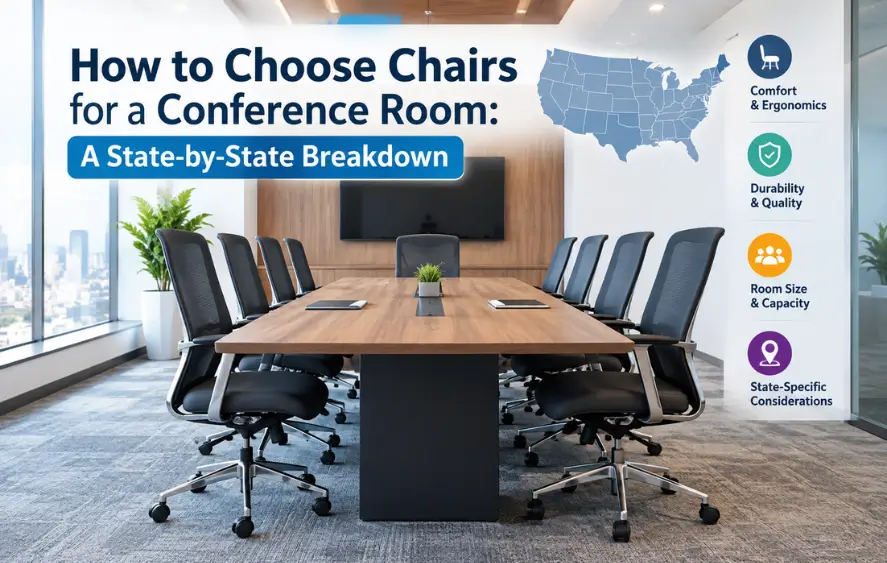
Why Conference Room Chair Selection Matters More Than You Think
Choosing the right chairs for your conference room is a decision that affects employee health, meeting productivity, furniture longevity, and your organization's professional image. In Canada, where offices must accommodate everything from humid coastal summers to dry prairie winters, the stakes are higher than most facility managers realize.
The average knowledge worker spends 1.5 to 2 hours per day in meetings. Over a year, that adds up to roughly 400 hours of seated meeting time per employee. When chairs lack proper ergonomic support, those hours translate into back pain, reduced concentration, and lower participation quality. The Canadian Centre for Occupational Health and Safety (CCOHS) identifies prolonged sitting in poorly designed seating as a significant contributor to musculoskeletal disorders (MSDs), which account for approximately 40% of all workplace injury claims in Canada.
Beyond health considerations, conference room chairs are a capital investment. A typical 12-seat boardroom may require $6,000 to $24,000 in seating alone, depending on specifications. Choosing poorly means replacing chairs prematurely, disrupting meeting schedules, and absorbing costs that could have been avoided with better upfront planning.
This guide walks through the complete decision process—from understanding your meeting patterns to selecting specific chair types, sourcing from Canadian suppliers, and building a maintenance plan that extends useful life.
The Real Cost of Getting It Wrong
Before examining what to look for, it helps to understand what happens when conference room seating fails.
Premature replacement cycles. Low-quality chairs in high-use conference rooms often show visible wear—flattened cushions, peeling upholstery, wobbly bases—within 18 to 24 months. Quality chairs from established manufacturers typically last 7 to 12 years in comparable conditions.
Employee complaints and accommodation requests. When chairs cause discomfort, employees request replacements or accommodations. In unionized Canadian workplaces, these requests can trigger formal processes under provincial occupational health and safety legislation. Addressing seating complaints reactively costs more than specifying properly from the start.
Damage to professional reputation. Boardrooms host clients, investors, and partners. Chairs that squeak, wobble, or look dated send an unintended message about your organization's attention to detail. This matters particularly in sectors like finance, law, and consulting, where meeting spaces function as extensions of your brand.
Reduced meeting effectiveness. Uncomfortable participants shift positions, lose focus, and contribute less. Research on workplace comfort consistently links physical discomfort to cognitive load—the brain devotes resources to managing discomfort rather than engaging with discussion content.
Key Factors to Evaluate When Selecting Conference Room Chairs
Ergonomic Design and Adjustability
Ergonomics should be the first filter, not an afterthought. A chair that looks impressive but lacks proper support will generate complaints and potentially contribute to injury claims.
What to look for:
-
Adjustable seat height. The seat should adjust to allow feet to rest flat on the floor with thighs roughly parallel to the ground. Standard range is 16 to 21 inches from floor to seat top.
-
Seat depth. The seat pan should leave 2 to 4 inches between the back of the knees and the front edge of the seat. Some chairs offer adjustable seat depth, which accommodates taller and shorter users.
-
Lumbar support. Adjustable lumbar support lets users position the curve to match their lower back. Fixed lumbar support works only if the chair fits the user's body dimensions.
-
Backrest angle. A slight recline (100 to 110 degrees) reduces spinal compression compared to an upright 90-degree position. Locking mechanisms should allow users to set and maintain their preferred angle.
-
Armrests. Adjustable height and width armrests prevent shoulder hunching. For conference rooms, flip-up or retractable armrests help chairs tuck under tables when not in use.
The ergonomic-participation connection. When participants can adjust seating to their body, they maintain better posture and experience less fatigue during long meetings. This directly supports sustained attention and contribution quality. For meetings exceeding 90 minutes, ergonomic seating becomes a functional requirement rather than a comfort preference.
Canadian standards context. While Canada does not have a single mandatory ergonomic standard for office chairs, CSA Group publishes guidelines related to office ergonomics (CSA Z412-17, "Office Ergonomics – An Application Standard for Workplace Ergonomics"). Provincial workers' compensation boards, including WorkSafeBC and Ontario's WSIB, reference ergonomic principles in their guidance. Choosing chairs that meet or exceed these guidelines demonstrates due diligence and reduces liability exposure.
Materials: Balancing Durability, Comfort, and Canadian Climate
Conference room chairs face different demands than individual workstations. They experience higher turnover (multiple users per day), more frequent adjustment, and often sit in spaces with variable temperature and humidity.
Upholstery options:
-
Mesh back with fabric seat. Breathable, promotes airflow, and works well in heated Canadian offices during winter. Mesh backs reduce heat buildup during long meetings. Quality mesh resists sagging for years.
-
Full fabric upholstery. Traditional appearance suitable for formal boardrooms. Fabric selection matters—tight weaves resist pilling and staining better than loose weaves. Look for fabrics rated for commercial use (typically 30,000+ double rubs on the Wyzenbeek scale).
-
Leather and faux leather. Durable, easy to clean, and appropriate for executive settings. Genuine leather develops character over time; high-quality polyurethane (PU) leather offers similar appearance at lower cost. In dry Canadian winters, leather may require conditioning to prevent cracking.
-
Vinyl. Highly durable and moisture-resistant. Suitable for rooms used for dining or events where spills are possible. Lower-end vinyl can look dated; specify commercial-grade vinyl for professional appearance.
Frame and base materials:
-
Nylon bases. Lightweight, impact-resistant, and cost-effective. Reinforced nylon handles daily use well.
-
Aluminum bases. Lighter than steel, resistant to corrosion, and visually refined. Common in premium conference seating.
-
Steel bases. Extremely durable but heavier. Chrome-plated steel offers polished appearance; powder-coated steel provides colour options and hides scratches better.
Climate considerations for Canadian facilities. Offices with forced-air heating create dry conditions that can cause leather to crack and wood components to shrink. Humidified buildings reduce this risk. In coastal British Columbia, higher ambient humidity makes mesh and fabric more comfortable year-round. In prairie provinces, where winter indoor humidity can drop below 20%, specifying leather with protective conditioning or choosing fabric over leather may extend chair lifespan.
Aesthetics and Design Coherence
Conference room chairs contribute to the visual identity of your meeting space. The right chairs complement the table, room architecture, and organizational culture without dominating the design.
Considerations:
-
Style alignment. Executive boardrooms typically suit leather or tailored fabric chairs with polished bases. Collaborative meeting rooms can accommodate more relaxed designs—mesh backs, colourful fabrics, or mixed materials.
-
Colour strategy. Neutral tones (black, grey, navy, brown) offer flexibility and hide wear. Accent colours can tie chairs to organizational branding but may date faster.
-
Table compatibility. Chair height must work with table height. Standard conference tables are 29 to 30 inches high; chairs should allow users to sit with forearms roughly level with the table surface.
-
Visual consistency. Mixing chair styles within a single room looks unintentional. If you need different chair types (e.g., task chairs at one end, side chairs along the walls), maintain consistent colour and material families.
Budget: Realistic Expectations for Canadian Buyers
Conference room chair pricing in Canada varies widely based on brand, materials, features, and quantity. Understanding typical ranges helps set realistic budgets and evaluate proposals.
Price tiers (per chair, CAD, 2024–2025):
| Tier | Price Range | Typical Specifications | Expected Lifespan |
|---|---|---|---|
| Budget | $150–$350 | Basic fabric or mesh, limited adjustability, nylon base | 3–5 years |
| Mid-range | $350–$700 | Ergonomic adjustments, quality fabric or mesh, reinforced base | 6–9 years |
| Premium | $700–$1,200 | Full ergonomic features, premium materials, aluminium base | 10–15 years |
| Executive | $1,200–$2,500+ | Leather, advanced ergonomics, designer branding | 12–20 years |
Total cost of ownership. A $250 chair replaced every 4 years costs $625 over 10 years (excluding disposal and procurement costs). A $600 chair lasting 10 years costs $600. The mid-range option often delivers better long-term value despite higher upfront cost. Factor in warranty coverage—premium chairs typically include 10- to 12-year warranties, while budget chairs may offer only 1 to 3 years.
Canadian procurement considerations. Prices from U.S. suppliers require currency conversion and may include duties, brokerage fees, and cross-border shipping costs. Canadian suppliers often provide better warranty service and parts availability. For large orders, leasing options through Canadian financial institutions can spread costs while preserving capital.
Durability and Build Quality
Durability determines how long chairs remain functional and presentable. In conference rooms, chairs may endure 10 to 20 adjustment cycles per day, repeated rolling and swiveling, and occasional misuse (leaning back on two legs, standing on seats).
Indicators of quality construction:
-
Weight rating. Commercial chairs typically support 250 to 300 pounds. Higher ratings indicate more robust components.
-
Cylinder quality. Pneumatic cylinders from reputable manufacturers (e.g., Suspa, Stabilus) last longer than generic alternatives. Class 4 cylinders (highest grade) resist leaking and failure.
-
Caster quality. Soft casters protect hardwood and laminate floors; hard casters suit carpet. Hooded casters resist hair and debris accumulation—important in Canadian offices where winter salt and grit can clog exposed mechanisms.
-
Stitching and seams. Double-stitched seams and reinforced stress points indicate better construction. Inspect sample chairs for loose threads or uneven stitching.
-
Warranty terms. Comprehensive warranties covering components (not just frame) signal manufacturer confidence. Look for warranties that include cylinders, casters, and mechanisms.
Mobility and Flexibility
Conference room chairs must move easily to accommodate different meeting configurations. Rigid or heavy chairs discourage rearrangement and reduce room flexibility.
Mobility features:
-
Casters vs. glides. Casters (wheels) suit hard floors and allow easy movement. Glides (fixed feet) suit carpet but require lifting to reposition. For multipurpose rooms, casters are generally preferable.
-
Swivel function. Swivel chairs allow users to turn toward speakers or screens without moving the entire chair. Standard in most conference seating.
-
Weight. Chairs weighing 30 to 45 pounds balance stability with maneuverability. Extremely light chairs may feel flimsy; very heavy chairs are difficult to rearrange.
-
Stacking capability. For rooms that occasionally need open floor space, stacking chairs offer flexibility. However, stacking chairs typically sacrifice ergonomic adjustability. Use them as supplemental seating rather than primary conference chairs.
Types of Conference Room Chairs
Ergonomic Task Chairs
Best for: Collaborative meeting rooms, training rooms, and any space where meetings regularly exceed 60 minutes.
Ergonomic task chairs offer full adjustability—seat height, armrests, lumbar support, back angle—and prioritize user comfort over formal appearance. Mesh-back models are popular for their breathability and modern aesthetic.
Trade-offs: Higher cost than basic side chairs. May look less formal in executive settings.
Examples: Herman Miller Aeron, Steelcase Series 2, Haworth Very.
Executive and Boardroom Chairs
Best for: Formal boardrooms, executive meeting spaces, and client-facing rooms.
Executive chairs feature premium materials (leather, high-end fabric), polished bases, and refined silhouettes. They typically include ergonomic adjustments but prioritize appearance alongside comfort.
Trade-offs: Higher cost. Leather requires more maintenance than fabric or mesh.
Examples: Global Total Office Loover, Keilhauer Sguig, Nienkämper designs.
Multipurpose and Side Chairs
Best for: Small meeting rooms, hot-desking areas, and supplemental seating.
Multipurpose chairs offer basic comfort with limited adjustability. They work well for short meetings (under 45 minutes) and spaces where chairs must tuck fully under tables.
Trade-offs: Limited ergonomic support for extended sitting. Not suitable as primary seating for long meetings.
Examples: Global Sonic, SitOnIt Novo, 9to5 Seating Logic.
Stacking and Folding Chairs
Best for: Flexible spaces, event overflow, and rooms that convert between uses.
Stacking chairs prioritize storage efficiency over comfort. Use them as supplemental seating, not primary conference chairs.
Trade-offs: Minimal ergonomic features. Not appropriate for meetings exceeding 30 minutes.
How to Measure Your Conference Room Before Buying
Accurate measurements prevent costly mistakes. Before selecting chairs, measure the following:
Room dimensions:
-
Length and width of the room
-
Ceiling height (affects visual proportion)
-
Door width (chairs must fit through for delivery and rearrangement)
Table specifications:
-
Table height (standard: 29–30 inches)
-
Table length and width
-
Table shape (rectangular, oval, boat-shaped, round)
-
Pedestal or leg configuration (affects legroom)
Clearance requirements:
| Measurement | Recommendation |
|---|---|
| Chair width per person | 24–30 inches |
| Table edge to wall (for chair pull-out) | 36–48 inches |
| Chair pull-out space (behind chair) | 18–24 inches |
| Walkway behind seated users | 32–36 inches minimum |
Practical calculation. For a 12-foot by 20-foot room with a 10-foot by 5-foot table, you can seat 3 people per side (6 total) plus 1 at each end (8 total) using 30-inch-wide chairs. Adding more chairs requires either a larger table or smaller chairs—neither of which improves comfort.
Accessibility considerations. Under the Accessible Canada Act and provincial accessibility legislation, meeting spaces should accommodate wheelchairs and mobility devices. Ensure at least one clear path of 36 inches width and provide removable chairs at accessible positions.
Sourcing Conference Room Chairs in Canada
Canadian Manufacturers and Suppliers
Canada has a robust office furniture ecosystem. Sourcing domestically offers advantages: shorter lead times, reduced shipping costs, easier warranty service, and compliance with Canadian standards.
Major Canadian manufacturers:
-
Global Furniture Group (Ontario). One of North America's largest office furniture manufacturers, with extensive conference seating lines.
-
Keilhauer (Ontario). Premium manufacturer known for design-forward seating, including conference and boardroom chairs.
-
Nienkämper (Ontario). High-end furniture for executive spaces, with custom capabilities.
-
Teknion (Ontario). Full-range office furniture, including conference seating and tables.
-
Artopex (Quebec). Quebec-based manufacturer with strong presence in Eastern Canada.
-
Superior Office Interiors (Alberta). Western Canadian supplier with broad product range.
National dealers and distributors:
-
Grand & Toy (nationwide). Large-scale supplier with online and showroom presence.
-
Staples Professional (nationwide). Convenient for smaller orders and standard products.
-
Nova Visual Products (nationwide). Focus on visual communication and office furniture.
Regional considerations:
-
Quebec. Strong domestic manufacturing base; provincial procurement preferences may favour local suppliers. Montreal-area dealers offer bilingual service.
-
Ontario. Highest concentration of manufacturers and dealers. Competitive pricing due to market density.
-
Alberta and Prairies. Fewer manufacturers, but established dealers in Calgary and Edmonton provide access to major brands. Shipping from Ontario or Quebec adds cost and lead time.
-
British Columbia. Vancouver-area dealers serve the Lower Mainland; coastal climate may influence material selection (mesh and fabric over leather).
-
Atlantic Canada. Limited local manufacturing; most products ship from Central Canada. Factor in longer lead times.
Evaluating Suppliers
Questions to ask:
-
What is your lead time for delivery and installation?
-
Do you provide samples for evaluation?
-
What warranty terms apply, and who handles claims?
-
Do you offer maintenance and repair services?
-
Can you accommodate custom fabric or finish selections?
-
What are your payment terms and financing options?
Sample evaluation. Always request sample chairs before committing to a large order. Sit in them for at least 30 minutes. Adjust every feature. Roll on the intended floor surface. Test the swivel and recline mechanisms. A chair that feels fine for 5 minutes may become uncomfortable after 30.
Maintenance and Longevity: Extending Chair Life in Canadian Offices
Routine Maintenance
Weekly:
-
Wipe seats and armrests with appropriate cleaner (fabric cleaner for upholstery, leather conditioner for leather).
-
Check for loose casters or debris wrapped around wheel axles.
Monthly:
-
Inspect cylinder function (chair should rise and lower smoothly).
-
Tighten any loose screws or bolts.
-
Vacuum fabric surfaces to remove dust and grit.
Annually:
-
Deep clean upholstery per manufacturer instructions.
-
Lubricate moving parts (casters, swivel mechanism) with appropriate lubricant.
-
Inspect for structural damage—cracks in base, fraying upholstery, bent components.
Seasonal Considerations for Canadian Climates
Winter:
-
Salt and grit tracked into buildings can clog casters and scratch floors. Increase caster cleaning frequency during winter months.
-
Dry indoor air can cause leather to crack. Apply leather conditioner every 3 to 4 months during heating season.
-
Static electricity increases in dry conditions. Anti-static sprays or humidification can reduce shocks.
Summer:
-
Humidity can cause fabric to feel damp and promote odour. Ensure adequate ventilation in conference rooms.
-
Mesh chairs are more comfortable in humid conditions than leather or heavy fabric.
When to Repair vs. Replace
| Issue | Repair If... | Replace If... |
|---|---|---|
| Worn upholstery | Chair is under 5 years old; replacement fabric available | Structural damage; multiple chairs affected |
| Failed cylinder | Chair is otherwise in good condition | Chair is over 8 years old; repair cost exceeds 30% of replacement |
| Broken caster | Simple replacement; casters are standardized | Base is damaged; multiple casters failing |
| Loose or wobbly mechanism | Tightening or minor part replacement resolves | Frame is cracked or bent |
A Decision Framework for Conference Room Chair Selection
Use this step-by-step framework to guide your selection process.
Step 1: Define Meeting Patterns
-
Meeting duration. Under 30 minutes? 30–90 minutes? Over 90 minutes?
-
Frequency. Daily use? Weekly? Occasional?
-
User diversity. Will chairs accommodate a range of body types and mobility needs?
-
Meeting type. Formal presentations? Collaborative workshops? Client meetings?
Step 2: Set Budget Parameters
-
Total budget. How much can you allocate for seating?
-
Cost per chair. Divide total budget by number of chairs needed.
-
Lifecycle cost. Consider total cost over 10 years, including maintenance and replacement.
Step 3: Prioritize Features
Rank these factors by importance for your organization:
-
Ergonomics and adjustability
-
Durability and warranty
-
Aesthetics and brand alignment
-
Mobility and flexibility
-
Maintenance requirements
-
Canadian sourcing and support
Step 4: Shortlist Chair Types
Based on Steps 1–3, identify 2 to 3 chair categories that fit your needs. For most Canadian conference rooms:
-
Executive boardrooms: Premium executive chairs with leather or high-end fabric.
-
Collaborative meeting rooms: Ergonomic task chairs with mesh backs.
-
Multipurpose rooms: Mid-range multipurpose chairs with basic ergonomic features.
-
Flexible spaces: Stacking chairs as supplemental seating.
Step 5: Evaluate Samples
Request samples from 2 to 3 suppliers. Evaluate:
-
Comfort during a 30-minute seated test
-
Adjustment range and ease of use
-
Build quality and finish
-
Appearance in your actual meeting space
-
Caster performance on your floor surface
Step 6: Verify Supplier Capabilities
Confirm:
-
Lead time meets your schedule
-
Warranty terms are acceptable
-
Delivery and installation included
-
After-sales support available
-
References from similar Canadian organizations
Step 7: Place Order and Plan Installation
-
Confirm quantities and specifications in writing
-
Schedule delivery to minimize disruption
-
Arrange for old chair disposal or recycling
-
Brief staff on adjustment features and maintenance
Summary: Essential Decision Criteria
Choosing conference room chairs requires balancing multiple factors. Use this summary as a quick reference.
Must-have features:
-
Adjustable seat height (16–21 inch range)
-
Lumbar support (adjustable preferred)
-
Weight rating of at least 250 pounds
-
Warranty of at least 5 years (10+ preferred)
-
Casters suitable for your floor type
Canadian-specific considerations:
-
Source from Canadian manufacturers or dealers when possible for warranty service and parts availability
-
Account for climate: mesh and fabric for humid regions, leather conditioning for dry winter conditions
-
Factor in provincial accessibility requirements for meeting spaces
-
Budget in CAD and account for any cross-border costs if sourcing internationally
Budget guidance:
-
Budget: $150–$350 per chair (3–5 year lifespan)
-
Mid-range: $350–$700 per chair (6–9 year lifespan)
-
Premium: $700–$1,200 per chair (10–15 year lifespan)
-
Executive: $1,200–$2,500+ per chair (12–20 year lifespan)
Red flags to avoid:
-
Chairs without adjustable seat height
-
Warranties under 3 years
-
Suppliers who cannot provide samples
-
Prices significantly below market (indicates compromised materials or construction)
-
No local service or parts availability
Final recommendation. For most Canadian conference rooms, mid-range ergonomic task chairs ($350–$700) offer the best balance of comfort, durability, and value. Executive boardrooms justify premium seating ($700–$1,200+) for both function and presentation. Avoid budget chairs for primary meeting seating—the short-term savings rarely justify the long-term costs.
Invest in samples, test thoroughly, and choose suppliers who will support your investment over its full lifespan. The right chairs will serve your organization for a decade or more, supporting productive meetings and demonstrating your commitment to employee wellbeing and professional excellence.