
You're drinking your morning coffee and feel a sharp twinge in your back molar. Or maybe you notice a dark spot on your tooth that wasn't there before. Could it be a cavity? If you're asking yourself "how do I know if I have a cavity," you're not alone. Tooth decay remains one of the most common chronic health conditions in Canada, affecting millions of adults and children each year.
The challenge is that cavities don't always announce themselves with obvious pain. Early-stage tooth decay can develop silently, which is why regular dental checkups matter. By the time you feel discomfort, the decay may have progressed beyond the point where it can be reversed with fluoride or remineralization.
This guide will walk you through the visible signs, physical symptoms, and risk factors associated with cavities. You'll learn how to perform a basic self-assessment, understand when professional diagnosis is necessary, and discover what treatment options exist within Canada's dental care system.
What Is a Cavity? Understanding Tooth Decay
A cavity, also called dental caries, is permanent damage to the hard surface of your tooth. It develops when bacteria in your mouth produce acids that erode tooth enamel—the protective outer layer. Once enamel breaks down, decay can spread into the softer dentin layer beneath, and eventually reach the pulp where nerves and blood vessels reside.
The cavity formation process happens in stages:
Stage 1: Demineralization. Plaque—a sticky film of bacteria—builds up on your teeth. When you consume sugars or starches, these bacteria produce acid that attacks enamel. This stage is reversible with proper oral hygiene and fluoride.
Stage 2: Enamel decay. The enamel weakens and develops small holes. At this point, a dentist can often detect the cavity before you notice symptoms.
Stage 3: Dentin decay. Decay reaches the dentin, the layer beneath enamel. You may begin experiencing sensitivity to hot, cold, or sweet foods.
Stage 4: Pulp involvement. Bacteria reach the tooth pulp, causing pain and potentially infection. Root canal treatment or extraction may be required.
Stage 5: Abscess formation. Infection spreads beyond the tooth root, creating a pus-filled pocket. This is a dental emergency requiring immediate care.
Understanding these stages helps you recognize that early detection makes treatment simpler, less invasive, and less expensive.
Visible Signs of a Cavity: What to Look For
Not all cavities are visible to the naked eye, especially those forming between teeth or beneath existing fillings. However, certain visual cues can indicate decay.
Dark Spots or Holes in Your Teeth
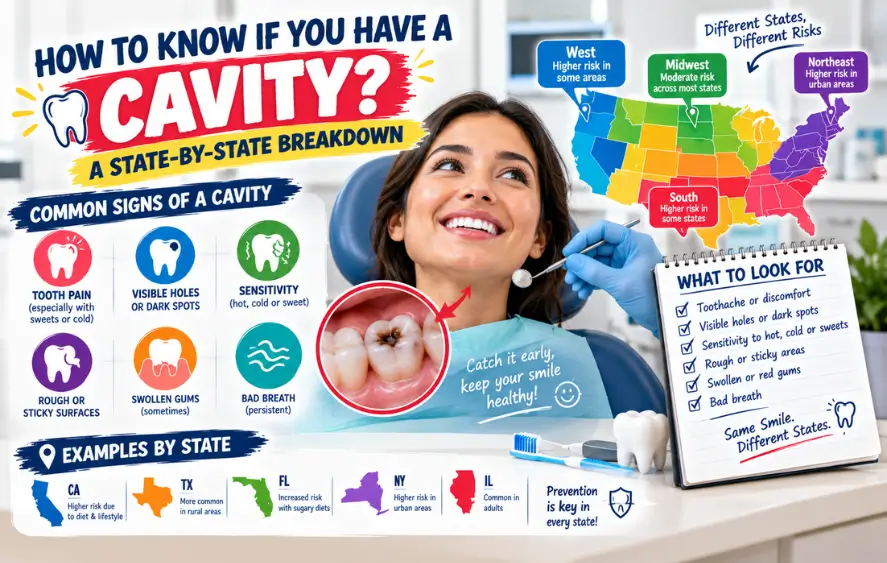
A small dark spot on a tooth surface may be an early cavity. These spots typically appear brown, black, or grey. They're most common on chewing surfaces of back teeth (molars and premolars) and along the gum line. Not every dark spot is a cavity—some are stains from coffee, tea, or tobacco—but any new discolouration warrants a dental examination.
White or Chalky Patches
Before a cavity forms a visible hole, you might notice white, chalky areas on your teeth. This indicates demineralization—the early stage of decay where enamel is losing minerals. These spots are often reversible with fluoride treatment and improved oral hygiene.
Visible Pitting or Cratering
As decay progresses, the tooth surface may develop a noticeable pit or crater. You might feel this with your tongue before you see it in the mirror. Pitting on the chewing surface of a molar is a classic sign of moderate decay.
Discolouration Around Existing Fillings
If you have older dental fillings, watch for darkening around the edges. This can indicate that decay has developed beneath or around the filling—a condition called recurrent decay. This type of cavity is particularly common and often invisible until a dentist takes an X-ray.
What You Can't See Matters Too
Cavities between teeth (interproximal cavities) and those under the gum line are typically invisible without dental X-rays. This is why professional examinations remain essential even if your teeth look fine in the mirror.
Physical Symptoms: How a Cavity Feels
Pain is often the most noticeable cavity symptom, but it's not always present—especially in early stages. Here's what you might experience.
Tooth Sensitivity
A common early sign is sensitivity to hot, cold, or sweet foods and drinks. You might feel a quick, sharp sensation when eating ice cream or drinking hot tea. This happens because the decay has reached the dentin, which contains microscopic tubules that connect to nerve endings.
Spontaneous Toothache
A persistent toothache that occurs without an obvious trigger may indicate advanced decay. The pain might be dull and throbbing, or sharp and intermittent. Some people experience pain when biting down, which can suggest decay has weakened the tooth structure.
Pain When Chewing
If biting down causes discomfort, the cavity may have progressed significantly. Pain on chewing can also indicate a cracked tooth or an infected pulp—both require prompt dental attention.
Bad Breath or Unpleasant Taste
Persistent bad breath (halitosis) or a bad taste in your mouth can signal a cavity. Bacteria feeding on decayed tissue produce sulphur compounds that cause odour. While bad breath has many causes, a cavity that has reached the pulp can create a distinct, foul taste.
Bleeding or Swollen Gums Near a Tooth
While gum disease is the most common cause of bleeding gums, a cavity near the gum line can also irritate surrounding tissue. If you notice bleeding or swelling localized to one tooth, decay may be the culprit.
When There Are No Symptoms
Many cavities produce no symptoms until they're advanced. This is especially true for cavities forming between teeth or under old fillings. Regular dental visits—typically every six to twelve months—allow your dentist to catch decay before it causes pain.
Risk Factors: Are You More Likely to Develop Cavities?
Certain factors increase your likelihood of developing tooth decay. Understanding your personal risk profile helps you take targeted preventive action.
Dietary Habits
Frequent consumption of sugary or starchy foods and drinks feeds cavity-causing bacteria. Sipping sugary beverages throughout the day is particularly harmful because it keeps your teeth bathed in acid. In Canada, beverages like pop, sports drinks, and sweetened coffee drinks are common culprits.
Oral Hygiene Practices
Brushing twice daily with fluoride toothpaste and flossing once daily are foundational habits. Skipping these allows plaque to accumulate and acids to attack enamel. Using an electric toothbrush can improve plaque removal, especially for people with limited dexterity.
Dry Mouth (Xerostomia)
Saliva neutralizes acids and washes away food particles. A dry mouth—caused by medications, medical conditions, or aging—increases cavity risk. This is a common issue among older Canadians, many of whom take multiple prescriptions.
Previous Cavities or Fillings
If you've had cavities before, you're at higher risk for new ones. Existing fillings can also weaken over time, creating spaces where bacteria accumulate.
Gum Recession
As gums recede—due to age, aggressive brushing, or gum disease—the tooth root becomes exposed. Root surfaces lack enamel and are more vulnerable to decay.
Acid Reflux or Eating Disorders
Stomach acid that reaches the mouth erodes enamel. Gastroesophageal reflux disease (GERD) and eating disorders like bulimia can cause significant enamel loss, increasing cavity risk.
Socioeconomic and Geographic Factors
Dental care in Canada is not universally covered by provincial health plans. While children from low-income families may qualify for federal or provincial dental programs, many adults face out-of-pocket costs. This can lead to delayed care and higher cavity rates in certain populations.
Access to dental care also varies by province and region. Rural and remote communities—particularly in northern Canada—often have fewer dentists, longer wait times, and higher rates of untreated decay. According to the Canadian Health Measures Survey, approximately 25% of Canadians report avoiding dental care due to cost.
Age Considerations
Children and teenagers are at high risk due to dietary habits and developing oral hygiene routines. Older adults face increased risk from gum recession, dry mouth, and difficulty maintaining oral care. Adults aged 30 to 50 often see cavities at the gum line due to years of accumulated wear.
How to Check for a Cavity at Home: A Step-by-Step Self-Assessment
While self-diagnosis cannot replace a professional dental exam, you can perform a basic assessment to determine whether you should book an appointment.
Step 1: Good Lighting and a Mirror
Find a well-lit area and use a small mirror to examine your teeth. Look at all surfaces—front, back, and chewing edges. A flashlight or your phone's light can help illuminate hard-to-see areas.
Step 2: Look for Discolouration
Check for brown, black, or grey spots. Pay attention to the grooves of your molars and the area along your gum line. White, chalky patches also warrant attention.
Step 3: Feel for Roughness or Holes
Using a clean finger or the blunt end of a toothpick, gently feel your tooth surfaces. A cavity may feel like a rough patch, a soft spot, or a small hole. Never probe aggressively—you could damage enamel or introduce bacteria.
Step 4: Note Sensitivity
Pay attention to how your teeth respond to hot and cold foods or drinks. A lingering sensitivity or sharp pain in one specific tooth suggests decay.
Step 5: Check for Pain When Biting
Bite down gently on a clean piece of gauze or a soft object. If you feel pain in one area, that tooth may have a cavity or crack.
Step 6: Assess Bad Breath or Taste
Persistent bad breath or a foul taste that doesn't improve with brushing may indicate decay, especially if localized to one area.
What Your Self-Assessment Can and Cannot Tell You
Your home check can identify visible signs and symptoms, but it cannot detect cavities between teeth, under fillings, or below the gum line. It also cannot determine the depth of decay. If you notice anything suspicious, schedule a dental appointment.
Professional Diagnosis: What to Expect at the Dentist
A definitive cavity diagnosis requires a dental examination. Here's what happens during a typical appointment in Canada.
Visual Examination
Your dentist will examine your teeth using a small mirror and a dental explorer (a thin, curved instrument). They'll look for discolouration, soft spots, and holes. They'll also check existing fillings for signs of breakdown.
Dental X-Rays
X-rays (radiographs) are essential for detecting cavities between teeth and under fillings. Most Canadian dental offices use digital X-rays, which emit less radiation than traditional film. Bitewing X-rays are commonly taken every one to two years for adults, depending on risk.
Cavity Detection Tools
Some dentists use additional technologies:
-
Laser fluorescence devices: These detect decay by measuring how tooth structure fluoresces under specific light wavelengths.
-
Transillumination: A bright light is shone through the tooth to reveal shadows caused by decay.
-
Intraoral cameras: These capture high-resolution images that your dentist can show you on a screen.
Determining Cavity Severity
Once a cavity is found, your dentist will assess its depth and location. This determines the appropriate treatment, from a simple filling to a root canal or extraction.
When to See a Dentist: Timing Matters
You should book a dental appointment if you experience any of the following:
-
Persistent toothache or pain when chewing
-
Sensitivity to hot, cold, or sweet foods that lingers
-
Visible dark spots, holes, or chalky patches on teeth
-
Bleeding or swollen gums around a specific tooth
-
Bad breath or bad taste that doesn't resolve with brushing
-
A broken or lost filling
If you have swelling in your face or jaw, fever, or difficulty breathing or swallowing, seek emergency dental care immediately. These signs suggest a spreading infection that requires urgent treatment.
In Canada, you can access dental care through private dental offices. If you don't have dental insurance, consider contacting your provincial dental association for information on low-cost clinics or payment plans. Some provinces offer programs for low-income adults and children.
Cavity Treatment Options: What Happens Next
Treatment depends on the stage and extent of decay.
Fluoride Treatment
For very early decay (demineralization without a hole), your dentist may apply professional fluoride varnish or gel. This can remineralize enamel and reverse the process.
Dental Fillings
For cavities that have created a hole, a filling is the standard treatment. Your dentist removes the decayed tissue and fills the space with a material such as composite resin, amalgam, or glass ionomer. Composite fillings are tooth-coloured and commonly used in Canada.
Crowns
If a large portion of the tooth is decayed, a crown (cap) may be needed to restore structure and function.
Root Canal Therapy
When decay reaches the pulp, root canal treatment removes infected tissue, cleans the canal, and seals it. The tooth is then restored with a crown.
Tooth Extraction
In severe cases where the tooth cannot be saved, extraction is necessary. Your dentist may discuss replacement options such as implants, bridges, or dentures.
Cost Considerations in Canada
Dental treatment costs vary by province and procedure. A basic filling may cost $150 to $400, while a root canal can range from $700 to $1,500 or more. Crowns typically cost $800 to $2,000. If you have dental insurance through an employer or private plan, check your coverage. The Canadian Dental Care Plan (CDCP), introduced in 2023, aims to improve access for eligible Canadians.
Prevention: Protecting Your Teeth from Cavities
Prevention is always better than treatment. These strategies reduce your cavity risk.
Brush Twice Daily with Fluoride Toothpaste
Use a soft-bristled toothbrush and brush for two minutes. Angle the bristles toward your gum line and use gentle, circular motions.
Floss Daily
Flossing removes plaque and food particles between teeth where your toothbrush can't reach. If traditional floss is difficult, try floss picks or a water flosser.
Limit Sugary and Acidic Foods
Reduce frequency of sugar consumption rather than just amount. Sipping a sugary drink over hours is worse than having it with a meal.
Drink Water, Especially with Fluoride
Tap water in many Canadian communities contains fluoride, which strengthens enamel. Drinking water throughout the day also washes away food particles.
Chew Sugar-Free Gum
Chewing sugar-free gum after meals stimulates saliva flow, which neutralizes acids. Look for gum with xylitol, a natural sweetener that inhibits cavity-causing bacteria.
Visit Your Dentist Regularly
Professional cleanings remove tartar (hardened plaque) that brushing can't eliminate. Regular exams catch cavities early when treatment is simplest.
Consider Dental Sealants
Sealants are thin plastic coatings applied to the chewing surfaces of molars. They're commonly recommended for children and teenagers but can benefit adults at high risk.
Frequently Asked Questions About Cavity Detection
Can a cavity go away on its own?
Early-stage decay (demineralization) can be reversed with fluoride and improved oral hygiene. Once a hole forms in the enamel, it cannot heal without dental treatment.
How long does it take for a cavity to form?
Cavity development varies. Some people develop decay within months, while others go years without issues. Factors include diet, oral hygiene, saliva composition, and genetics.
Are cavities always painful?
No. Many cavities cause no pain until they're advanced. This is why regular dental exams are important.
Can I see a cavity in the mirror?
You may see visible signs like dark spots or holes, but cavities between teeth and under fillings are invisible without X-rays.
What does a cavity look like?
Cavities can appear as brown, black, or grey spots; white chalky patches; or visible holes. They may also show as darkening around the edges of old fillings.
Is it a cavity or just sensitivity?
Sensitivity can have many causes, including exposed roots, worn enamel, or gum recession. Only a dentist can determine whether a cavity is present.
How much does it cost to treat a cavity in Canada?
Costs vary by province and severity. A simple filling may cost $150 to $400. Root canals and crowns cost more. Check with your dental office for a treatment estimate.
Key Takeaways: What to Remember
-
Cavities develop in stages, starting with demineralization and progressing to pulp involvement and abscess.
-
Visible signs include dark spots, white chalky patches, holes, and discolouration around fillings.
-
Physical symptoms include sensitivity, toothache, pain when chewing, and bad breath.
-
Many cavities produce no symptoms until advanced, making regular dental exams essential.
-
Risk factors include sugary diet, poor oral hygiene, dry mouth, gum recession, and previous cavities.
-
Self-assessment can identify visible signs but cannot replace professional diagnosis.
-
See a dentist if you notice persistent pain, sensitivity, or visible decay.
-
Treatment options range from fluoride varnish to fillings, crowns, root canals, and extraction.
-
Prevention includes brushing, flossing, limiting sugar, drinking fluoridated water, and regular dental visits.
-
Dental care in Canada is primarily private; costs vary, and the Canadian Dental Care Plan may help eligible individuals.