
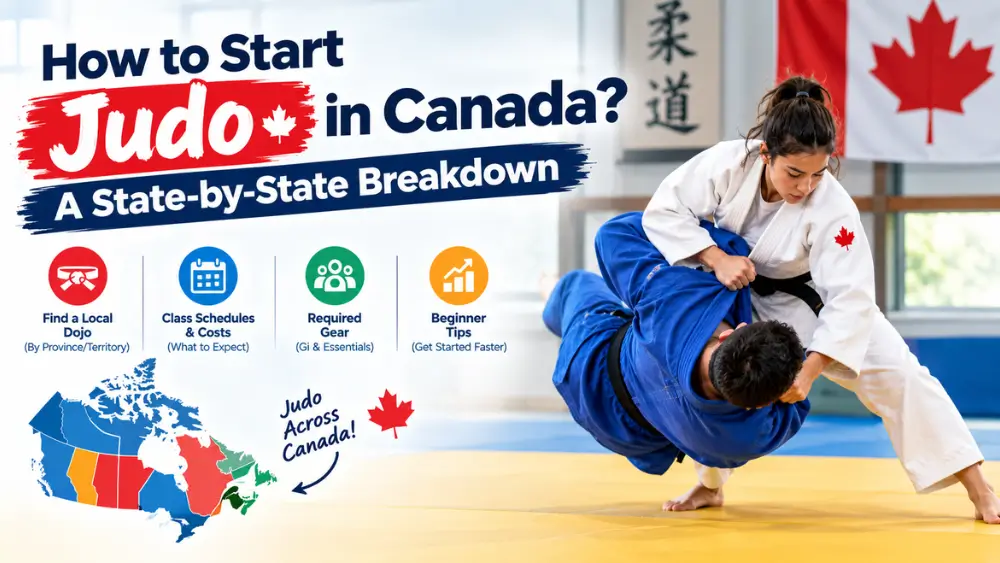
How to start judo is a question more Canadians are asking as interest in martial arts grows across the country. Whether you're in Toronto, Vancouver, Calgary, or a smaller community, judo offers a structured, affordable path to fitness, self-defence, and personal growth. This guide walks you through everything you need to know—from choosing your first dojo to earning your first belt.
What Is Judo? A Quick Primer for Canadian Beginners
Judo is a Japanese martial art and Olympic sport founded in 1882 by Dr. Jigoro Kano. The word translates to "gentle way," reflecting its core principle: using an opponent's momentum and balance against them rather than relying on brute strength.
Unlike striking arts such as karate or Muay Thai, judo focuses on throws, pins, joint locks, and chokes. The goal in competition is to throw your opponent onto their back with force and control, pin them for 20 seconds, or force a submission through an arm lock or choke.
Key facts about judo:
-
It's an Olympic sport (debuted in 1964)
-
It emphasizes leverage over size—making it effective for all body types
-
It's practiced in over 200 countries, including a strong Canadian judo community
-
It builds cardiovascular fitness, strength, flexibility, and mental discipline simultaneously
For Canadians curious about martial arts, judo offers a unique combination: the physical intensity of a combat sport with a strong ethical framework emphasizing respect and mutual benefit.
Why Choose Judo? Benefits for Canadian Adults and Kids
Before committing to any martial art, it helps to understand what makes judo distinct. Here's what judo offers that other disciplines may not:
Physical Health Benefits
-
Full-body workout: Judo training develops strength, endurance, flexibility, and coordination
-
Cardiovascular conditioning: Randori (sparring) sessions provide intense interval-style training
-
Functional fitness: The movements translate to real-world strength and balance
-
Low-impact options: Unlike striking arts, judo doesn't involve repeated head trauma
Mental and Emotional Benefits
-
Stress relief: The focus required during training provides a mental break from daily worries
-
Confidence: Learning to defend yourself builds genuine self-assurance
-
Discipline: The structured environment teaches focus and respect
-
Community: Dojos foster strong social bonds among members
Judo vs. Other Martial Arts: A Quick Comparison
| Factor | Judo | Brazilian Jiu-Jitsu | Karate | Taekwondo |
|---|---|---|---|---|
| Primary focus | Throws, pins, submissions | Ground grappling | Striking, forms | Kicking, striking |
| Olympic sport | Yes | No | No | Yes |
| Learning curve | Moderate | Gradual | Variable | Variable |
| Typical Canadian cost | $80–$150/month | $120–$200/month | $100–$180/month | $100–$160/month |
| Self-defence focus | High (throws, control) | High (ground) | Moderate | Moderate |
Judo tends to be more affordable than BJJ in most Canadian cities, partly because it's supported by national and provincial sport organizations.
Step 1: Find a Reputable Judo Dojo in Canada
The first practical step in how to start judo is finding a quality club near you. Canada has a well-organized judo structure, which makes this easier than you might expect.
How to Find Judo Classes Near You in Canada
Start with Judo Canada's club finder. The national governing body maintains a directory of registered clubs across all provinces. This is your most reliable starting point because registered clubs meet safety and coaching standards.
Check provincial associations. Each province has its own judo organization:
-
Judo BC (British Columbia)
-
Judo Ontario
-
Judo Québec
-
Judo Alberta
-
Judo Manitoba
-
And similar bodies in Saskatchewan, Nova Scotia, New Brunswick, Newfoundland, PEI, and the territories
These associations can point you to certified dojos and explain local pathways to competition.
Search local terms. Try queries like:
-
"judo classes for adults near me [city]"
-
"beginner judo Vancouver"
-
"judo for kids Toronto"
-
"adult judo Calgary"
Visit in person. Before committing, visit at least two clubs. Watch a class, talk to the instructor, and observe how students interact.
What to Look for in a Judo Dojo
| Quality Indicator | What It Looks Like |
|---|---|
| Certified coaches | Instructors hold NCCP (National Coaching Certification Program) credentials |
| Clean facility | Proper mats (tatami), adequate space, good ventilation |
| Structured classes | Clear warm-up, instruction, practice, and cool-down |
| Safety focus | Emphasis on proper falling (ukemi) before throws |
| Welcoming atmosphere | Students and instructors acknowledge newcomers |
| Transparent pricing | Clear fees, no pressure to sign long contracts |
Red Flags to Avoid
-
Instructors who can't explain their credentials
-
No emphasis on ukemi (breakfall) training
-
Pressure to buy expensive equipment immediately
-
Classes where safety is clearly an afterthought
-
No connection to Judo Canada or provincial associations
Step 2: Understand the Costs of Starting Judo in Canada
Budgeting is a practical concern for most beginners. Here's what judo typically costs across Canada:
Typical Judo Costs in Canada (CAD)
| Expense | Typical Range | Notes |
|---|---|---|
| Monthly membership | $80–$150 | Varies by city and club |
| Annual registration (Judo Canada/provincial) | $40–$80 | Required for insurance and competition |
| Judogi (uniform) | $70–$150 | Beginner models; premium options cost more |
| Belt | Included or $10–$20 | Usually provided by club |
| First-year total | $600–$1,200 | Depending on location and club |
Regional Cost Variations
-
Toronto, Vancouver, Calgary: Higher end of the range ($100–$150/month)
-
Montreal: Mid-range ($90–$130/month), with some subsidized community programs
-
Smaller cities and towns: Often $80–$120/month
-
Community centre programs: Sometimes $50–$100 for a full season
Many clubs offer trial classes or introductory rates. Ask about these before committing.
Financial Assistance Options
-
Some municipalities offer recreation subsidies for low-income residents
-
KidSport Canada provides grants for children's sport registration
-
Some clubs offer payment plans or volunteer-based discounts
Step 3: What to Expect in Your First Judo Class
Knowing what happens in a typical beginner class reduces anxiety and helps you prepare.
Before Class
-
Arrive early. Introduce yourself to the instructor and mention it's your first class.
-
Wear appropriate clothing. If you don't have a judogi yet, wear comfortable athletic clothing without zippers or metal.
-
Remove jewellery. Rings, necklaces, and earrings can cause injuries or damage mats.
-
Trim your nails. Both fingers and toes—this is a safety courtesy.
During Class: Typical Structure
-
Bow-in ceremony: Students line up and bow to the instructor and each other. This formal start marks the beginning of training.
-
Warm-up (10–15 minutes): Joint rotations, light cardio, and dynamic stretching.
-
Ukemi practice: Learning to fall safely is the foundation of judo. You'll practice backward, side, and forward rolls.
-
Technique instruction: The instructor demonstrates a throw or hold, then students practice with a partner.
-
Randori (sparring): Beginners may watch or participate in light, controlled sparring. Full-intensity randori comes later.
-
Cool-down and bow-out: Stretching and a formal end to class.
First Class Tips
-
Don't compare yourself to others. Everyone started as a beginner.
-
Ask questions. Instructors expect beginners to need guidance.
-
Focus on ukemi. Safe falling protects you and builds confidence.
-
Hydrate. Bring a water bottle.
-
Expect to be tired. Judo is physically demanding, even at beginner levels.
Step 4: Get the Right Equipment
Judo has minimal equipment requirements compared to some martial arts, but quality matters.
Essential Gear
Judogi (uniform)
-
Made of thick, durable cotton to withstand gripping and throwing
-
Beginner gi: $70–$150
-
Look for a gi that fits according to Judo Canada guidelines (sleeves must be long enough, jacket must cover hips)
-
White is traditional; blue is also permitted in competition
Belt (obi)
-
Usually provided by your club when you pass your first grading
-
Colour indicates rank
Optional but helpful:
-
Mouthguard (if you have braces or want protection)
-
Knee pads (for those with sensitive knees)
-
Flip-flops for walking around the dojo (mat hygiene)
Where to Buy Judo Equipment in Canada
-
Local martial arts supply stores
-
Club pro shops (often offer discounts)
-
Online retailers like Amazon, Hatashita International (Canadian), or Fuji Sports
-
Some clubs sell used gis at reduced prices
Step 5: Understand the Judo Belt System in Canada
The belt system motivates progress and signals experience level. Canadian judo follows a standardised structure.
Judo Belt Progression (Canadian Standard)
| Belt Colour | Rank | Typical Timeline |
|---|---|---|
| White | 6th kyu | Beginner |
| Yellow | 5th kyu | 3–6 months |
| Orange | 4th kyu | 6–12 months |
| Green | 3rd kyu | 1–2 years |
| Blue | 2nd kyu | 2–3 years |
| Brown | 1st kyu | 3–4 years |
| Black | 1st dan (shodan) | 4–6 years |
Important notes:
-
Timelines vary by individual and club
-
Children's belt systems sometimes differ (more colours, faster progression)
-
Gradings typically involve demonstrating techniques, terminology, and sometimes light randori
-
Judo Canada sets national standards, but clubs may have slight variations
How Long Until I Get My Black Belt?
Most dedicated adult beginners reach shodan (first-degree black belt) in 4–6 years with consistent training (2–3 times per week). This isn't a race—the journey matters more than the destination.
Step 6: Train Safely and Avoid Common Beginner Mistakes
Safety is paramount in judo. Here's how to protect yourself and your training partners.
Essential Safety Practices
-
Master ukemi first. Never skip breakfall practice. It's your primary injury prevention tool.
-
Tap early and often. If you're caught in a submission, tap immediately. Ego causes injuries.
-
Communicate with your partner. Tell them if you have injuries or limitations.
-
Warm up properly. Cold muscles tear easily.
-
Don't train through pain. Sharp pain means stop. Dull soreness after training is normal; pain during training is not.
Common Beginner Mistakes
| Mistake | Why It's a Problem | Fix |
|---|---|---|
| Skipping ukemi practice | Increases injury risk | Commit to learning falls properly |
| Using strength over technique | Leads to exhaustion and poor form | Focus on leverage and timing |
| Comparing yourself to others | Creates frustration | Track your own progress |
| Training too hard too soon | Causes burnout and injury | Build gradually |
| Ignoring nutrition and rest | Slows recovery | Eat well, sleep enough |
Injury Prevention Tips
-
Strength train to support judo movements (core, legs, grip)
-
Stretch after training, not just before
-
Stay hydrated
-
Take rest days
Step 7: Set Realistic Goals and Track Progress
Beginners often wonder: How fast will I improve? Progress depends on training frequency, natural aptitude, and quality of instruction.
Sample Beginner Progression Timeline
| Timeframe | What to Expect |
|---|---|
| First month | Learning basic ukemi, etiquette, and simple throws |
| 3 months | Comfortable with fundamental throws and pins; possible first belt |
| 6 months | Able to perform basic randori; improved fitness |
| 1 year | Solid grasp of core techniques; yellow or orange belt |
| 2 years | Green belt level; competing locally if desired |
Setting SMART Goals for Judo
-
Specific: "I want to learn 10 throws this year"
-
Measurable: "I'll attend 2 classes per week"
-
Achievable: "I'll earn my yellow belt within 6 months"
-
Relevant: "This supports my fitness and self-defence goals"
-
Time-bound: "I'll compete in my first tournament within 18 months"
Judo in Canada: A Strong Tradition
Canada has a proud judo history. Canadian judoka have competed at every Olympic Games since 1964, with notable achievements including:
-
Nicolas Gill: Olympic silver (2000) and bronze (1992)
-
Antoine Valois-Fortier: Olympic bronze (2012)
-
Christa Deguchi: World champion (2019, 2023)
-
Jessica Klimkait: World champion (2021)
Judo Canada oversees the sport nationally, with provincial associations managing regional development. The country hosts numerous competitions each year, from local club tournaments to national championships.
Competitive Pathways in Canada
If competition interests you, the pathway typically looks like:
-
Local club tournaments
-
Provincial championships
-
National championships (age and belt divisions)
-
International competitions (for elite athletes)
Beginners don't need to think about competition immediately—but it's available when you're ready.
Frequently Asked Questions About Starting Judo
What age can you start judo?
Children can start as young as 4 or 5 in many Canadian clubs. Adults can begin at any age—it's never too late. Some people start in their 40s, 50s, or even 60s.
Do I need to be fit to start judo?
No. Judo training itself will improve your fitness. Start where you are and progress gradually.
Is judo safe?
Judo is as safe as any contact sport when practiced properly. Injury rates are lower than sports like soccer or basketball. The key is quality instruction and consistent ukemi practice.
How often should I train?
Beginners typically train 2–3 times per week. More frequent training accelerates progress but increases injury risk if you're not conditioned.
Can women do judo?
Absolutely. Judo is practiced by people of all genders. Women's judo has been an Olympic sport since 1992.
What's the difference between judo and jiu-jitsu?
Judo emphasizes throws and standing techniques; Brazilian Jiu-Jitsu focuses primarily on ground grappling. Traditional Japanese jiu-jitsu includes striking and is the predecessor to judo.
Do I need to speak Japanese?
No. While Japanese terminology is used in judo (e.g., uke, tori, randori), instructors explain everything in English or French depending on the region.
Your Next Steps: How to Start Judo This Week
You now have a complete roadmap. Here's your action plan:
-
Find clubs: Visit Judo Canada's website or search for provincial associations to locate dojos near you.
-
Visit in person: Watch a class and talk to instructors at 2–3 clubs.
-
Ask about trials: Many clubs offer a free or low-cost trial class.
-
Prepare: Gather comfortable athletic clothing and a water bottle for your first session.
-
Show up: Walk through the door. That's the hardest part—and you've already done the research.
Judo is a lifelong journey. The skills you build—physical, mental, and social—compound over years. Whether you're in Toronto, Vancouver, Montreal, Calgary, or anywhere else in Canada, a welcoming dojo is likely closer than you think.
Ready to start? Your first class is waiting.