
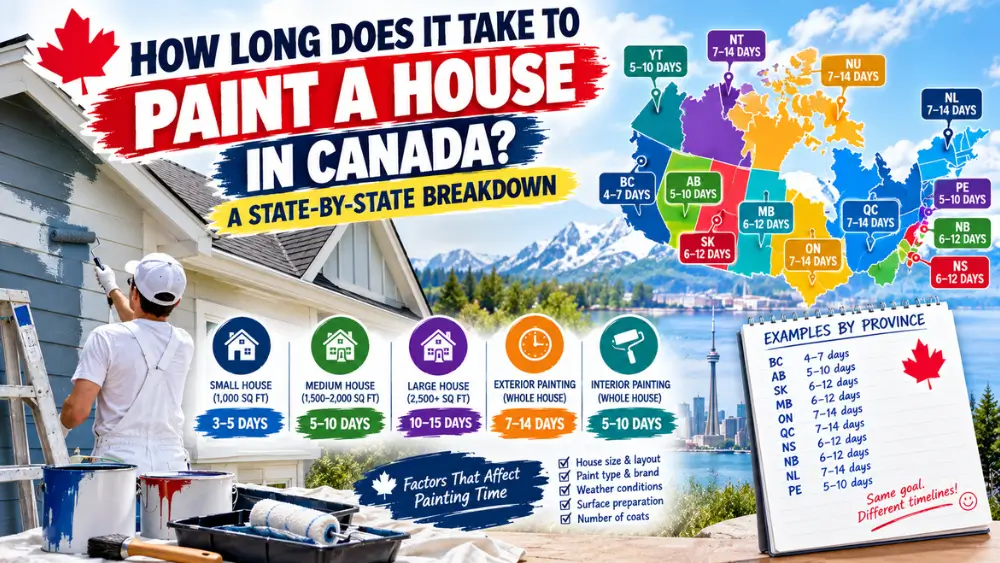
Introduction:
If you're planning a painting project, you want a realistic timeline—not a vague "it depends." Here's what you can actually expect:
A professional crew paints the average Canadian home interior in 3–6 days. Exterior painting typically takes 4–8 days, weather permitting.
Those numbers assume favourable conditions. A 1,200 sq ft bungalow in Saskatchewan? Interior done in 3 days. A century home in Nova Scotia with peeling clapboard and three coats needed? That exterior could stretch to 10 days or more.
This guide breaks down exactly how long house painting takes in Canada, province by province, room by room, and scenario by scenario. You'll find specific timelines, 2025 cost estimates in Canadian dollars, and the factors that push projects from "quick weekend job" to "why is this still happening in week three?"
Interior House Painting: How Long Does It Really Take?
Room-by-Room Time Estimates
Professional painters work efficiently, but every room has its own timeline. Here's what to expect from a two-person crew:
| Room Type | Size Range | Time Required |
|---|---|---|
| Bedroom | 100–150 sq ft | 4–6 hours |
| Living Room | 200–350 sq ft | 6–10 hours |
| Kitchen | 150–250 sq ft | 8–12 hours |
| Bathroom | 40–80 sq ft | 3–5 hours |
| Basement (finished) | 500–800 sq ft | 2–3 days |
| Open Concept Main Floor | 600–1,000 sq ft | 3–4 days |
Whole-home interior painting (2,000 sq ft, 8 rooms) typically runs 5–7 days with professionals. That includes prep, priming where needed, two coats on walls, and trim work.
What About DIY Interior Painting?
Multiply those timelines by 2.5 to 3 times. A professional crew painting a bedroom in 5 hours takes a homeowner 12–15 hours spread across multiple days. Why? Professionals have:
-
Commercial sprayers and high-quality rollers
-
Established workflows (cutting in, rolling, back-rolling)
-
Drying time knowledge specific to local humidity
-
No learning curve
A realistic DIY timeline for a full interior: 2–3 weeks of evenings and weekends.
Interior Painting Phases Breakdown
Understanding where time goes helps you plan better:
Phase 1: Preparation (30–40% of total time)
-
Moving furniture and protecting floors: 2–4 hours
-
Cleaning walls and repairing damage: 3–6 hours
-
Taping trim, windows, and outlets: 2–3 hours
-
Priming bare drywall or colour changes: 4–8 hours
Phase 2: Painting (40–50% of total time)
-
Cutting in edges: 3–5 hours
-
Rolling walls (first coat): 4–6 hours
-
Rolling walls (second coat): 3–5 hours
-
Trim and doors: 4–8 hours
Phase 3: Reassembly (10–20% of total time)
-
Removing tape and protection: 1–2 hours
-
Replacing fixtures and furniture: 2–4 hours
-
Touch-ups: 1–2 hours
Exterior House Painting: Canadian Timelines
How Long Does Exterior Painting Take in Canada?
Exterior projects take longer than interiors for three reasons: larger surface areas, weather dependency, and more extensive prep work.
Typical exterior painting timeline for a professional crew:
| Home Size | Simple Job (good condition) | Complex Job (repairs needed) |
|---|---|---|
| 1,000–1,500 sq ft | 4–5 days | 7–9 days |
| 1,500–2,500 sq ft | 5–7 days | 8–12 days |
| 2,500–3,500 sq ft | 7–10 days | 12–16 days |
"Simple" means power washing, minor scraping, one primer coat where needed, and two finish coats. "Complex" includes extensive scraping, wood rot repair, caulking, and possibly three finish coats.
The Canadian Weather Factor
This is where Canadian exterior painting differs dramatically from American advice. Your painting window is short—typically May through September in most provinces, with some flexibility into early October in southern regions.
Regional weather impacts on exterior painting:
-
Prairies (Alberta, Saskatchewan, Manitoba): Dry air means faster drying between coats. You can sometimes apply two coats in one day. However, summer thunderstorms can halt progress unexpectedly.
-
Ontario and Quebec: Humidity in July and August slows drying. Allow 24 hours between coats instead of 4–6 hours.
-
Atlantic Canada: The most challenging region. Coastal humidity, fog, and rain create unpredictable scheduling. Budget extra days for weather delays.
-
British Columbia (coastal): Mild temperatures allow a longer painting season (April–October), but rain is always a risk. Interior BC (Okanagan, Kootenays) offers ideal dry conditions.
-
Northern Canada: Very short season (June–August). Exterior painting outside this window risks poor adhesion and premature failure.
Exterior Painting: What Takes So Long?
Surface preparation on exteriors is intensive:
-
Power washing: 3–5 hours (plus 24 hours drying time)
-
Scraping loose paint: 4–16 hours depending on condition
-
Sanding rough areas: 3–8 hours
-
Caulking gaps and joints: 2–4 hours
-
Priming bare wood: 4–8 hours
-
Masking windows, doors, fixtures: 3–5 hours
That's potentially 2–4 days of prep before a single finish coat goes on.
Factors That Extend or Shorten Painting Time
Factors That Add Time
Surface condition: Peeling, cracked, or chalking paint requires extensive prep. A home with failing paint can double the timeline.
Colour changes: Going from dark to light (or vice versa) often requires an extra coat. Deep colours like navy or red may need three coats for even coverage.
Number of colours: Each additional colour adds cutting-in time and requires cleaning tools between changes.
Height and accessibility: Two-storey homes with steep rooflines require scaffolding or lifts, adding setup time and slowing movement.
Texture: Stucco, brick, and rough-sawn wood absorb more paint and take longer to cover than smooth siding.
Age of home: Older homes (pre-1980) may have lead paint (requiring special handling) or uneven surfaces from decades of settling.
Factors That Shorten Time
New construction: Fresh drywall with no repairs needed moves quickly.
Single colour throughout: Painting every room the same colour eliminates cutting-in between rooms and reduces tool cleaning.
Vacant home: No furniture to move or protect saves hours per room.
Spray application: Professionals using airless sprayers can paint large areas 3–4 times faster than rolling—though masking takes longer.
Ideal weather: Low humidity, temperatures between 18–25°C, and no rain forecast allow uninterrupted exterior work.
Canadian Cost Estimates: What You'll Pay in 2025
Interior Painting Costs by Province
| Province | Cost per Sq Ft (Interior) | Average 2,000 Sq Ft Home |
|---|---|---|
| Ontario | $3.50–$5.50 | $7,000–$11,000 |
| British Columbia | $4.00–$6.00 | $8,000–$12,000 |
| Alberta | $3.25–$5.00 | $6,500–$10,000 |
| Quebec | $3.00–$4.75 | $6,000–$9,500 |
| Saskatchewan | $3.00–$4.50 | $6,000–$9,000 |
| Manitoba | $3.00–$4.50 | $6,000–$9,000 |
| Nova Scotia | $3.25–$5.00 | $6,500–$10,000 |
| New Brunswick | $3.00–$4.75 | $6,000–$9,500 |
| Newfoundland | $3.50–$5.25 | $7,000–$10,500 |
| PEI | $3.25–$5.00 | $6,500–$10,000 |
Prices in CAD, including labour and materials, standard two-coat application.
Exterior Painting Costs by Province
| Province | Cost per Sq Ft (Exterior) | Average 2,000 Sq Ft Home |
|---|---|---|
| Ontario | $2.50–$4.50 | $5,000–$9,000 |
| British Columbia | $3.00–$5.50 | $6,000–$11,000 |
| Alberta | $2.25–$4.00 | $4,500–$8,000 |
| Quebec | $2.25–$4.00 | $4,500–$8,000 |
| Atlantic Provinces | $2.50–$4.25 | $5,000–$8,500 |
| Prairies | $2.00–$3.75 | $4,000–$7,500 |
Exterior costs vary widely based on siding type, height, and prep requirements.
What Drives Costs Up
-
Lead paint abatement: $500–$2,000 extra for homes built before 1960
-
Wood rot repair: $50–$150 per repair location
-
Height access: Scaffolding rental adds $500–$1,500
-
Premium paint: Benjamin Moore Aura or Sherwin-Williams Duration cost 30–50% more than builder-grade
-
Colour consultations: $100–$300 if you want professional design input
DIY vs Professional Painting: Time and Cost Comparison
Time Investment Comparison
| Task | DIY Time | Professional Time |
|---|---|---|
| 3-Bedroom Interior | 2–3 weeks | 4–5 days |
| 2,000 Sq Ft Exterior | 4–6 weeks | 6–8 days |
| Single Room | 2–3 days | 5–8 hours |
| Kitchen Cabinets | 1–2 weeks | 3–4 days |
Cost Comparison (2,000 Sq Ft Interior)
| Expense | DIY | Professional |
|---|---|---|
| Paint | $800–$1,200 | Included |
| Primer | $200–$400 | Included |
| Supplies (rollers, brushes, tape, drop cloths) | $200–$350 | Included |
| Equipment rental (sprayer, ladder) | $100–$300 | Included |
| Labour | Your time (40–80 hours) | Included |
| Total | $1,300–$2,250 | $7,000–$11,000 |
Is DIY Worth It?
DIY saves money but costs time and often produces inferior results. Consider:
DIY makes sense when:
-
You have painting experience
-
The project is small (one or two rooms)
-
Surfaces are in good condition
-
You have flexible schedule
-
You genuinely enjoy the work
Hire professionals when:
-
The project involves height or difficult access
-
Extensive prep work is needed (scraping, repairs)
-
You need it done quickly
-
The home has lead paint
-
You want a warranty on the work
Canadian Painting Seasons: When to Schedule Your Project
Best Time for Exterior Painting by Region
| Region | Optimal Window | Notes |
|---|---|---|
| Southern Ontario | May–September | Avoid July humidity if possible |
| Northern Ontario | June–August | Short season, book early |
| Southern Quebec | May–September | Similar to Ontario |
| Atlantic Canada | June–September | Rain delays common |
| Prairies | June–August | Dry conditions ideal |
| Coastal BC | May–September | Longer season, watch for rain |
| Interior BC | May–September | Excellent conditions |
| Northern Territories | June–July | Very limited window |
Interior Painting: Year-Round Option
Interior painting works any time of year—a key advantage for Canadian homeowners. Winter is actually an excellent time for interior projects because:
-
Painters are less busy (better availability, sometimes lower prices)
-
No weather delays
-
Climate control ensures proper drying
-
You're stuck inside anyway
One caution: Interior paint needs ventilation. In winter, open windows briefly during and after painting to avoid fumes building up.
Common Mistakes That Delay Canadian Painting Projects
1. Painting exterior too early or late in the season
Paint needs temperatures above 10°C for proper curing. Painting in October in Alberta means risking poor adhesion when temperatures drop overnight.
2. Ignoring humidity
In Atlantic Canada, painting when humidity exceeds 70% can cause blistering and slow curing. Check forecasts and plan around wet periods.
3. Skipping primer
Skipping primer on bare wood or drastic colour changes always requires extra finish coats—actually taking longer than if you'd primed first.
4. Not accounting for drying time
Rushing between coats causes peeling and uneven finish. In humid conditions, wait 24 hours. In dry prairie air, 4–6 hours may suffice.
5. Underestimating prep work
Most painting delays come from prep, not painting. Budget twice as much time for prep as you think you need.
6. Painting over moisture
Exterior wood with high moisture content traps water under paint, causing peeling within months. Test with a moisture meter before painting.
7. Choosing the wrong paint for Canadian conditions
Not all paints handle freeze-thaw cycles well. Look for products formulated for Canadian climates—Benjamin Moore's exterior lines, Sherwin-Williams Duration, and Cloverdale Paint (a BC-based brand) all perform well.
Tips to Expedite Your Painting Project
For DIYers:
-
Buy quality tools. A $15 brush vs. a $40 brush isn't just about finish—cheap brushes lose bristles and slow you down.
-
Use paint pods and liners. Cleanup takes seconds instead of minutes.
-
Paint in the right order. Ceiling first, then walls, then trim, then doors.
-
Cut in one room while another dries. Eliminates waiting time.
-
Wrap rollers and brushes in plastic wrap between coats instead of cleaning—saves hours over a multi-day project.
-
Recruit help. Two people painting a room cuts time by 40% (not 50%—you still have setup and cleanup).
For hiring professionals:
-
Book in advance. Good painters in Canada book 4–8 weeks out during peak season.
-
Get multiple quotes. Prices vary 30–50% between contractors in the same city.
-
Clarify what's included. Does the quote include prep? Primer? Two coats? Cleanup?
-
Ask about scheduling. A crew juggling three jobs takes longer than one dedicated to your home.
-
Be ready. Have furniture moved and walls cleared before they arrive—saves you money and time.
Regional Considerations for Canadian Homeowners
Ontario and Quebec
High demand in spring and summer means booking early. Humidity in July and August affects drying times. Older homes in Toronto, Montreal, and Ottawa often need extensive prep due to decades of paint layers.
Atlantic Canada
The maritime climate is the biggest challenge. Fog, rain, and humidity limit painting days. Successful projects require flexible scheduling and patience. Local painters understand the climate—trust their recommendations on timing.
Prairies
Dry conditions are ideal for painting. Low humidity means fast drying and excellent adhesion. However, summer thunderstorms can appear suddenly—have a backup plan. The short season (June–August) means high demand.
British Columbia
Coastal BC offers the longest painting season in Canada (April–October). Interior BC (Okanagan, Kamloops) has ideal dry conditions. Vancouver's rain means exterior projects need weather contingency plans.
Northern Canada
The painting window is tight—often just 6–8 weeks. Plan well in advance and have materials ready. Local suppliers may have limited stock.
Frequently Asked Questions
How long does it take to paint a 1,500 sq ft house in Canada?
Interior: 4–5 days with professionals. Exterior: 5–7 days in good conditions, 8–10 days if repairs are needed.
Can you paint a house in winter in Canada?
Interior: Yes, with proper ventilation. Exterior: No—temperatures below 10°C prevent proper curing. Some products claim cold-weather application down to 2°C, but results are risky.
How much does it cost to paint a house interior in Toronto?
Expect $4,000–$8,000 for a typical 1,500–2,000 sq ft home, depending on condition and number of colours.
How long should paint dry between coats in Canada?
In dry conditions (Prairies): 4–6 hours. In humid conditions (Ontario, Atlantic): 12–24 hours. Always check the paint manufacturer's recommendations.
Do I need to prime before painting?
Yes if: painting bare wood/drywall, changing colours drastically, covering stains, or painting over glossy surfaces. No if: repainting a similar colour on previously painted walls in good condition.
How long does exterior paint last in Canada?
Quality exterior paint lasts 7–10 years on wood siding, 10–15 years on vinyl or aluminum. Harsh Canadian winters shorten lifespan compared to milder climates.
Conclusion:
The answer to "how long to paint a house" in Canada depends on your specific situation, but now you have real numbers to work with:
-
Interior: 3–6 days professional, 2–3 weeks DIY
-
Exterior: 4–8 days professional (weather permitting), 4–6 weeks DIY
-
Budget: $6,000–$12,000 for professional interior, $4,500–$11,000 for exterior
-
Best timing: Interior year-round, exterior June–September (varies by region)
The most important takeaway? Prep work drives timelines more than painting itself. Whether you hire or DIY, factor in proper preparation time. Rushing leads to peeling, uneven finishes, and repainting sooner than necessary.
If you're hiring, book early—especially for exterior work in peak season. If you're DIYing, be honest about your timeline and skills. Sometimes paying a professional saves money when you factor in your time, materials, and the cost of fixing mistakes.
For Canadian homeowners, the key is working with the climate, not against it. Paint in the right season, choose products formulated for Canadian conditions, and allow proper drying time. Do that, and your project will finish on schedule—and last for years.