
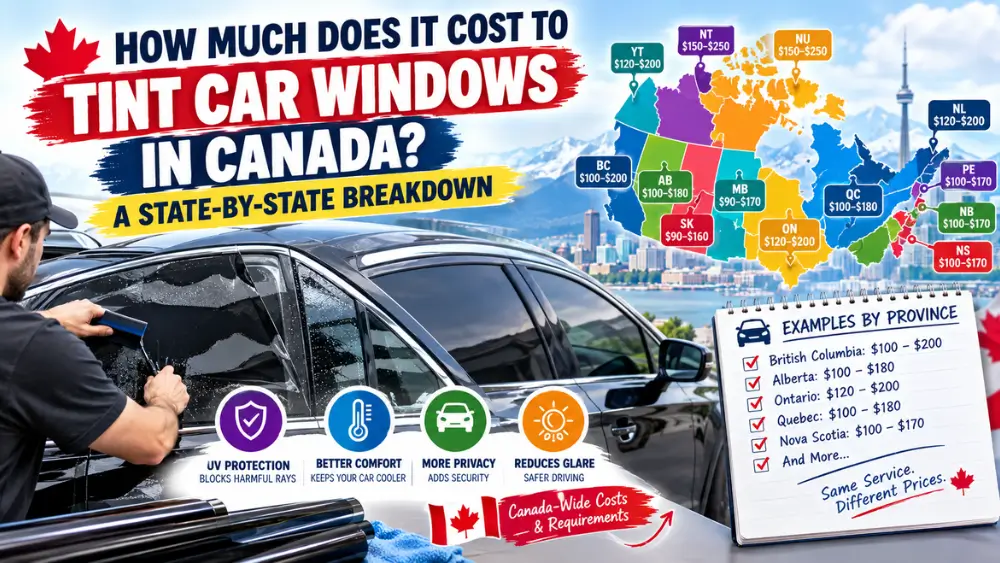
Quick Answer: Canadian Window Tinting Costs
Professional window tinting in Canada typically costs between $200 and $800 per vehicle for standard sedans, with most Canadian drivers paying $300 to $500 for a quality installation using mid-range films. SUVs, trucks, and vehicles with complex window configurations cost more—often $350 to $900. Luxury vehicles and those requiring premium ceramic films can exceed $1,000.
The final price depends on five primary factors: your province, vehicle type, tint film quality, number of windows, and the installer's experience level.
Window Tinting Cost Overview by Province
Window tinting prices in Canada vary by region due to differences in labor rates, competition, and local market conditions. Here is what Canadian drivers can expect to pay in 2026:
| Province | Sedan (Standard Film) | Sedan (Ceramic Film) | SUV/Truck (Standard) | SUV/Truck (Ceramic) |
|---|---|---|---|---|
| Ontario | $250–$450 | $400–$700 | $300–$550 | $500–$850 |
| British Columbia | $280–$500 | $450–$750 | $350–$600 | $550–$900 |
| Alberta | $250–$450 | $400–$700 | $300–$550 | $500–$850 |
| Quebec | $220–$400 | $350–$650 | $280–$500 | $450–$800 |
| Atlantic Canada | $200–$380 | $350–$600 | $250–$480 | $450–$750 |
| Saskatchewan/Manitoba | $220–$400 | $380–$650 | $280–$500 | $480–$800 |
Ontario has the largest number of tinting shops, which keeps prices competitive in urban areas like Toronto, Mississauga, and Hamilton. However, prices in smaller Ontario cities may be slightly higher due to less competition.
British Columbia tends to have higher prices, particularly in Vancouver and Victoria, where labor costs and commercial rent are elevated.
Quebec generally offers the lowest prices among major provinces, though quality varies significantly. Drivers in Montreal and Quebec City have many options, but should verify installer certifications.
Atlantic Canada prices are moderate, with Halifax and Moncton offering the most competitive rates.
What Factors Affect Window Tinting Cost in Canada?
Vehicle Type and Window Count
The number of windows requiring tint directly impacts labor time and material costs.
-
Coupes and sedans (typically 5–7 windows): $200–$500
-
SUVs and crossovers (typically 7–9 windows): $280–$600
-
Trucks with extended cabs (typically 6–8 windows): $300–$650
-
Minivans (typically 8–10 windows): $350–$700
-
Luxury vehicles with complex window shapes: add 15–30%
Vehicles with curved rear windows, defroster lines, or difficult-to-access panels require more installation time and skill. Expect to pay $50–$150 more for these configurations.
Tint Film Type and Quality
The film you choose represents 30–50% of the total cost. Here is how film types compare:
Dyed Film (Entry-Level)
-
Cost: $150–$300 installed
-
Lifespan: 3–5 years
-
Heat rejection: 15–25%
-
UV protection: 95%+
-
Best for: Budget-conscious drivers, older vehicles
Metallized Film (Mid-Range)
-
Cost: $250–$500 installed
-
Lifespan: 7–10 years
-
Heat rejection: 30–45%
-
UV protection: 99%
-
Best for: Most daily drivers
Carbon Film (Premium)
-
Cost: $350–$650 installed
-
Lifespan: 10–15 years
-
Heat rejection: 40–55%
-
UV protection: 99%
-
Best for: Drivers wanting durability without signal interference
Ceramic Film (Top-Tier)
-
Cost: $450–$900+ installed
-
Lifespan: 15+ years
-
Heat rejection: 50–80%
-
UV protection: 99%+
-
Best for: Luxury vehicles, hot climates, maximum comfort
Ceramic films do not interfere with GPS, cell phone, or radio signals—a critical consideration for modern vehicles with embedded antennas and electronic systems.
Tint Darkness Level
Most provinces regulate how dark you can tint front side windows. Common legal limits range from 35% visible light transmission (VLT) in Ontario to 50% VLT in some Atlantic provinces. Rear windows often have fewer restrictions.
Darker tints do not cost more to install. The price is determined by film type and coverage area, not darkness level. However, illegal tints may require removal and reinstallation if you fail a provincial inspection—adding $100–$200 to your total expense.
Labor Rates by Region
Installation labor accounts for 40–60% of the total cost. Regional labor rates in Canada vary:
-
Ontario: $80–$120/hour
-
British Columbia: $90–$130/hour
-
Alberta: $80–$120/hour
-
Quebec: $70–$100/hour
-
Atlantic Canada: $65–$95/hour
A typical sedan installation takes 2–4 hours. Complex vehicles or those requiring old tint removal can take 5–6 hours.
Additional Services
These add-ons increase your total investment:
-
Old tint removal: $75–$200 (varies by adhesive condition)
-
Front windshield strip: $40–$80
-
Headlight/taillight tinting: $80–$150 per pair
-
Mobile service: add $50–$100
-
Warranty upgrade: $30–$75
Provincial Window Tint Laws and Their Cost Implications
Understanding your province's tint laws prevents costly mistakes. Installing illegal tint can result in fines, forced removal, and failed safety inspections.
Ontario Window Tint Laws
Ontario permits a minimum of 35% VLT on front side windows. No tint is allowed on the windshield except for a top strip. Rear windows have no VLT restriction. Police can issue fines of $110–$500 for non-compliant tint.
Cost impact: Ontario drivers should verify film VLT before installation. Removing and replacing illegal tint costs $150–$350 extra.
British Columbia Window Tint Laws
BC requires 70% VLT on front side windows—one of the strictest limits in Canada. This means the front windows must allow at least 70% of light through. Rear windows can be any darkness.
Cost impact: BC drivers often tint only rear windows, reducing total cost to $150–$300. Full-vehicle tinting with legal front windows requires lighter film, which may not provide desired privacy.
Alberta Window Tint Laws
Alberta allows 35% VLT on front side windows. The windshield can have a top strip but no full tint. Rear windows have no restrictions.
Cost impact: Alberta drivers can achieve darker front tints than BC drivers at no additional cost.
Quebec Window Tint Laws
Quebec prohibits tint on front side windows and the windshield. Only rear windows and the rear windshield can be tinted. Fines range from $100–$200.
Cost impact: Quebec drivers typically spend $150–$350 for rear-only tinting. This significantly reduces the total expense compared to other provinces.
Atlantic Provinces Window Tint Laws
-
Nova Scotia: 50% VLT on front side windows
-
New Brunswick: 35% VLT on front side windows
-
Newfoundland: 35% VLT on front side windows
-
Prince Edward Island: 35% VLT on front side windows
Cost impact: Nova Scotia's stricter limit may require lighter films on front windows. Other Atlantic provinces follow the national average.
Saskatchewan and Manitoba Window Tint Laws
-
Saskatchewan: 50% VLT on front side windows
-
Manitoba: 50% VLT on front side windows
Cost impact: These provinces require lighter front tint than Ontario or Alberta. Drivers wanting maximum privacy must accept lighter films or tint only rear windows.
Does Window Tinting Require a Permit in Canada?
No Canadian province requires a permit for standard window tinting that meets legal VLT limits. However, medical exemptions exist for drivers who need darker tint due to photosensitivity or skin conditions.
Medical Exemption Process
If you need tint darker than provincial limits for medical reasons:
-
Obtain a letter from a licensed physician
-
Submit the letter to your provincial ministry of transportation
-
Receive an exemption certificate to carry in your vehicle
-
Present the certificate if stopped by police
Cost: Medical exemptions typically cost $50–$150 in administrative fees. The tint itself costs the same as standard installation.
DIY vs. Professional Window Tinting: Cost Comparison
DIY Window Tinting Costs
-
Pre-cut tint kits: $30–$100
-
Tint rolls (custom cut): $20–$60
-
Installation tools: $20–$50
-
Total DIY cost: $50–$150
Time investment: 2–6 hours for a first-time installer
Risks: Bubbles, creases, peeling, uneven edges, and potential window damage from improper heat shrinking. DIY tint often fails within 1–2 years.
Professional Window Tinting Costs
-
Total professional cost: $200–$800
-
Installation time: 2–4 hours
-
Warranty: 5 years to lifetime
-
Result: Clean, bubble-free finish that lasts 10+ years
Cost-Benefit Analysis
DIY saves $100–$650 upfront but often costs more long-term. Failed DIY tint requires professional removal ($75–$200) and reinstallation. Professional installation includes warranty coverage that protects your investment.
Recommendation: DIY is viable for rear-only tinting on older vehicles. Professional installation is strongly recommended for full-vehicle tinting, ceramic films, and any vehicle you plan to keep long-term.
Window Tint Warranty: What to Expect
Standard Warranty Coverage
Most Canadian tint shops offer:
-
Film warranty: 5 years to lifetime (covers bubbling, peeling, discoloration)
-
Labor warranty: 1–3 years (covers installation defects)
-
Fading warranty: 3–10 years (covers color shift)
What Voids a Warranty
-
Improper cleaning with ammonia-based products
-
Physical damage from accidents or vandalism
-
Removal or modification by another shop
-
Failure to follow care instructions
Warranty Comparison by Film Type
| Film Type | Typical Warranty |
|---|---|
| Dyed | 3–5 years |
| Metallized | 5–10 years |
| Carbon | 10 years |
| Ceramic | Lifetime |
Cost consideration: Lifetime warranty films cost $100–$300 more upfront but eliminate replacement costs for 15+ years.
How to Get Accurate Window Tinting Quotes in Canada
Step 1: Determine Your Needs
-
Which windows do you want tinted?
-
What VLT percentage do you want?
-
What film type fits your budget?
-
How long do you plan to keep the vehicle?
Step 2: Research Local Installers
-
Check Google Reviews and Facebook recommendations
-
Verify certifications (3M, Llumar, XPEL dealer status)
-
Ask for photos of completed work
-
Confirm warranty terms in writing
Step 3: Request Multiple Quotes
Get at least three quotes. Prices can vary by $150–$300 for identical services in the same city.
Step 4: Ask These Questions
-
What film brands do you carry?
-
What is the warranty on film and labor?
-
How long will installation take?
-
Do you remove old tint? At what cost?
-
Are you insured?
-
Can you show me VLT samples?
Step 5: Schedule Installation
Book an appointment during dry weather. Tint requires curing time (3–7 days) before rolling windows down.
Frequently Asked Questions
How much does it cost to tint car windows in Canada?
Professional window tinting in Canada costs $200–$800 for most vehicles. Sedans with standard film average $250–$450. SUVs and trucks cost $300–$600. Ceramic films add $150–$400 to the total price.
Is window tinting worth the cost?
Yes, for most drivers. Tint reduces interior heat by up to 60%, protects against UV damage, improves privacy, and can lower air conditioning usage. The investment pays back through comfort and vehicle protection over 5–10 years.
How much does it cost to tint windows in Ontario?
Ontario window tinting costs $250–$450 for sedans and $300–$550 for SUVs with standard film. Ceramic film installations range from $400–$850. Toronto prices are competitive due to high shop density.
Can I legally tint my front windows in Canada?
It depends on your province. Ontario, Alberta, and most Atlantic provinces allow 35% VLT on front side windows. BC requires 70% VLT. Quebec prohibits front window tint entirely. Always verify your provincial regulations before installation.
How long does window tint last?
Quality professional tint lasts 10–15 years with proper care. Ceramic films can last 15–20 years. DIY tint often fails within 1–3 years. Warranty coverage protects against premature failure.
Does window tint reduce heat in Canadian summers?
Yes. Ceramic tint rejects 50–80% of solar heat. Standard dyed tint rejects 15–25%. For maximum heat reduction in provinces with hot summers (Ontario, BC interior, Prairies), ceramic film is the best investment.
Can I wash my car after window tinting?
Wait 3–7 days before washing. Avoid rolling down windows for at least 48 hours. Use ammonia-free cleaners on tinted surfaces. Harsh chemicals void most warranties.
Does window tint affect vehicle insurance?
Window tint does not typically affect insurance rates. However, illegal tint that contributes to an accident may affect claim outcomes. Inform your insurer if you add tint as a vehicle modification.
How much does it cost to remove old window tint?
Professional tint removal costs $75–$200 depending on adhesive condition and window count. Removal plus reinstallation typically costs $300–$700 total.
Is ceramic window tint worth the extra cost?
Ceramic tint costs $150–$400 more than standard film but offers superior heat rejection, no signal interference, and lifetime warranty. For drivers in hot provinces or those keeping vehicles 5+ years, ceramic is worth the investment.
Summary:
Canadian drivers should budget $300–$500 for quality professional window tinting on a standard sedan. SUVs and trucks require $350–$650. Ceramic films add $150–$400 to any installation.
The lowest prices do not always represent the best value. A $200 tint job with poor film and no warranty costs more long-term than a $450 installation with lifetime coverage.
Verify your province's VLT laws before choosing film darkness. Illegal tint leads to fines, removal costs, and failed inspections.
Get multiple quotes, ask about warranty terms, and choose a certified installer with verifiable reviews. Window tinting is a long-term investment in your vehicle's comfort, appearance, and protection—choose accordingly.